
Last updated September 22, 2026
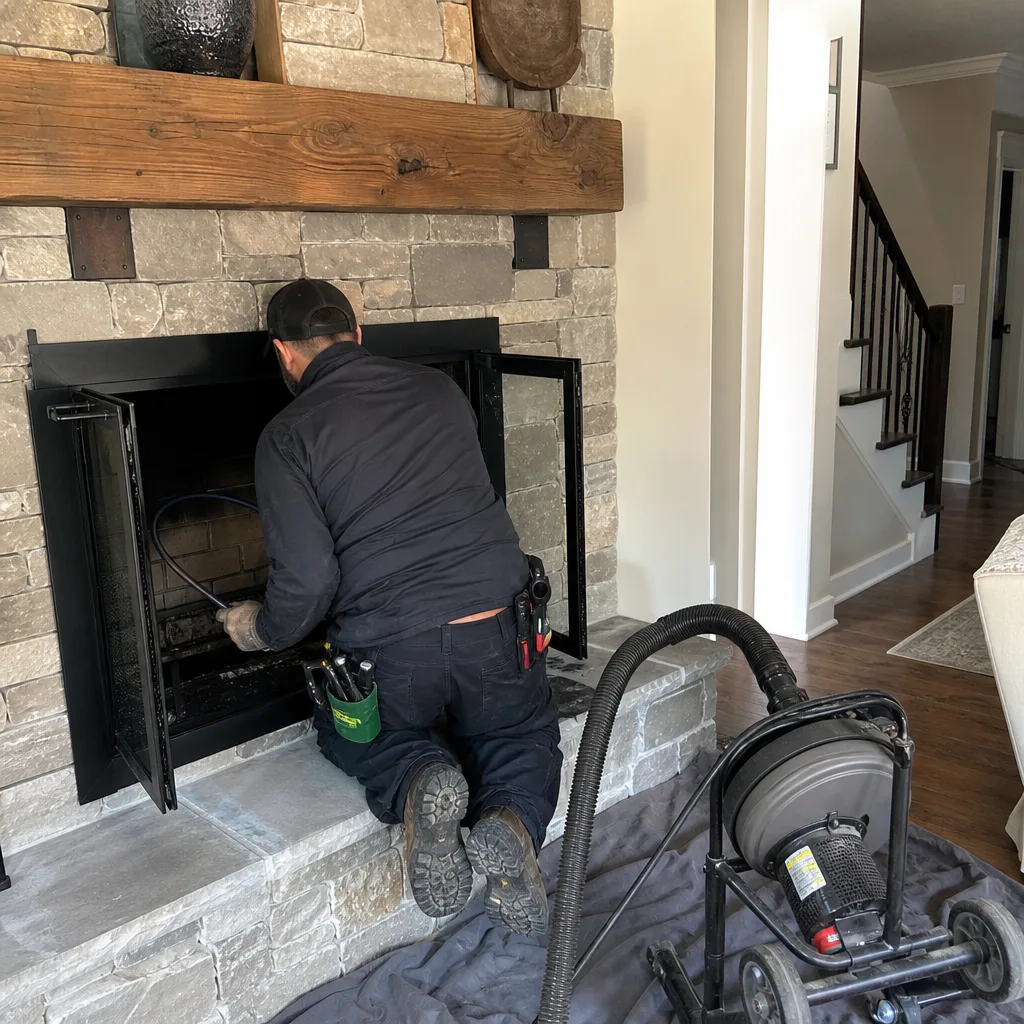
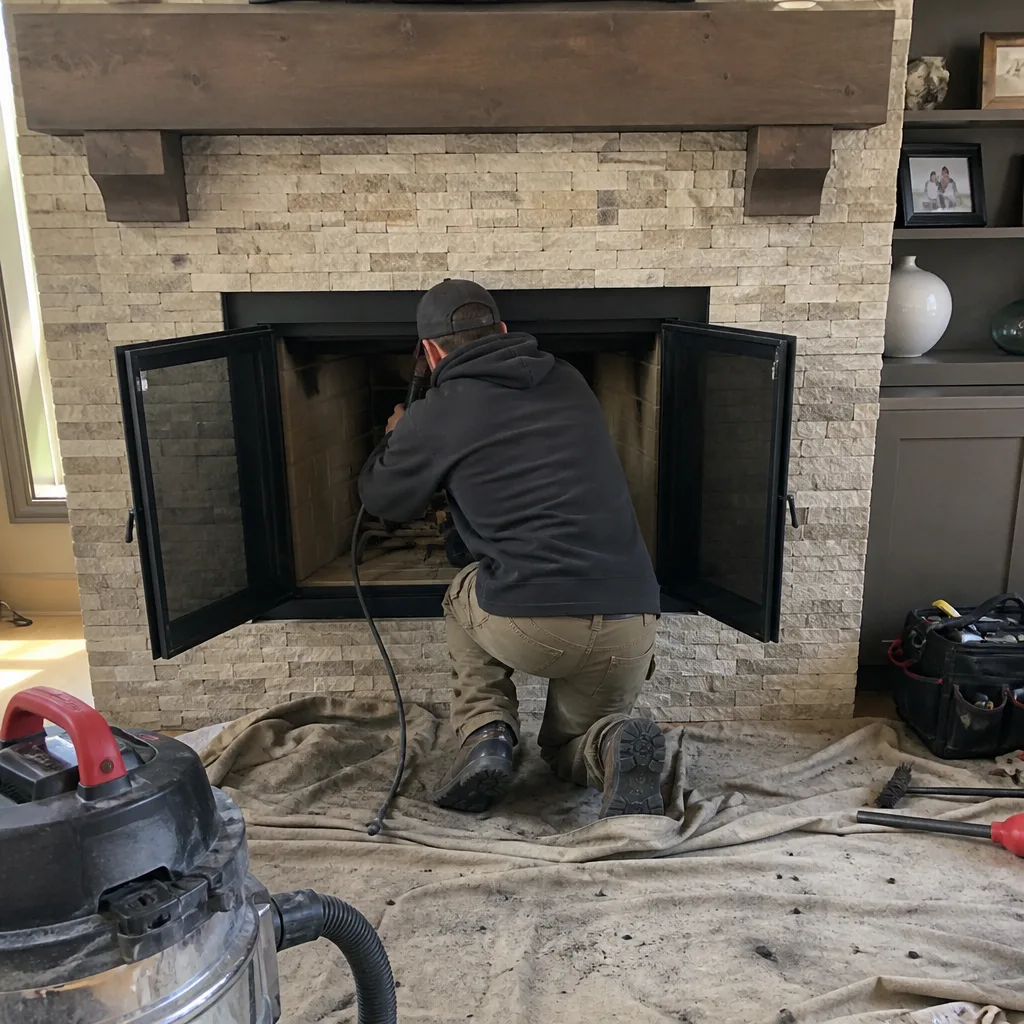
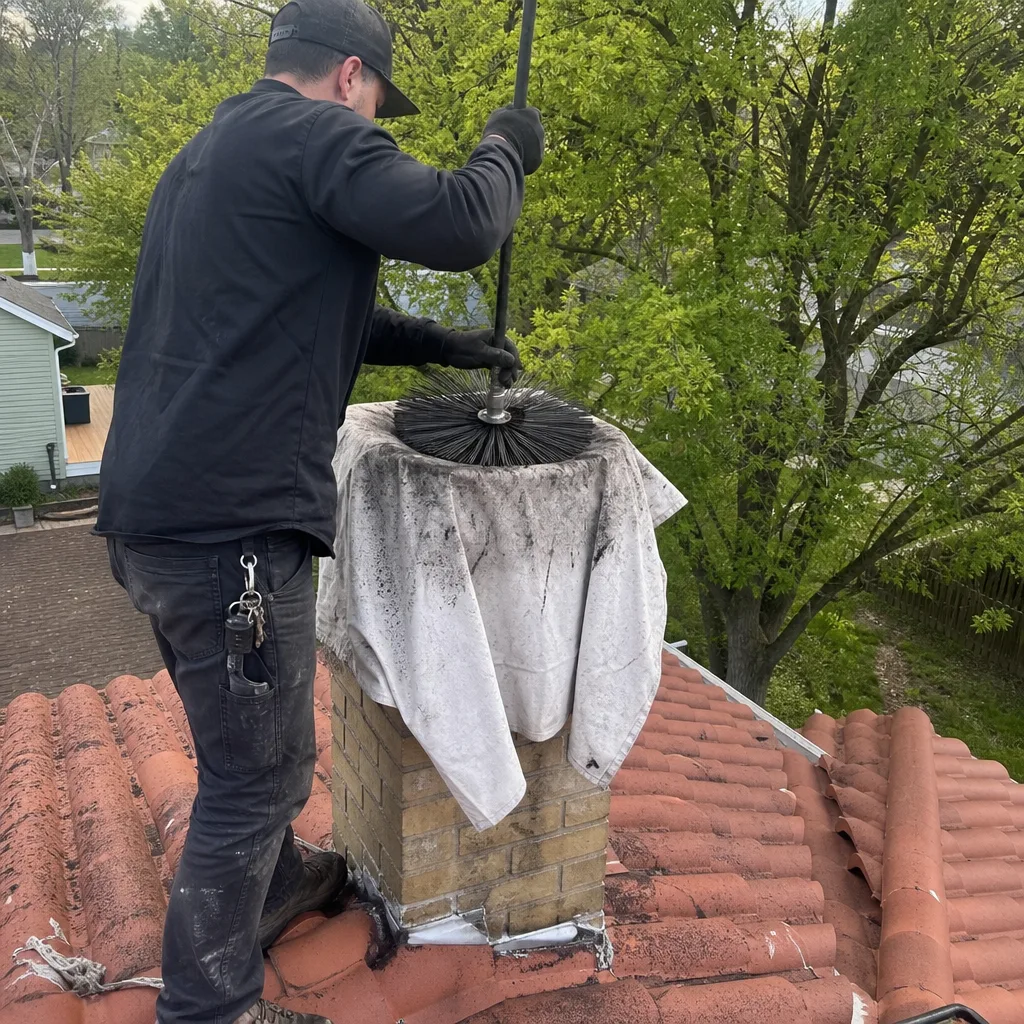
Level 1 sweep and inspection to the NFPA 211 annual standard - flue, crown, cap, and flashing checked and photographed
Chimney sweep logs do not sweep chimneys. They loosen some creosote - which then falls where a brush and vacuum still have to collect it.
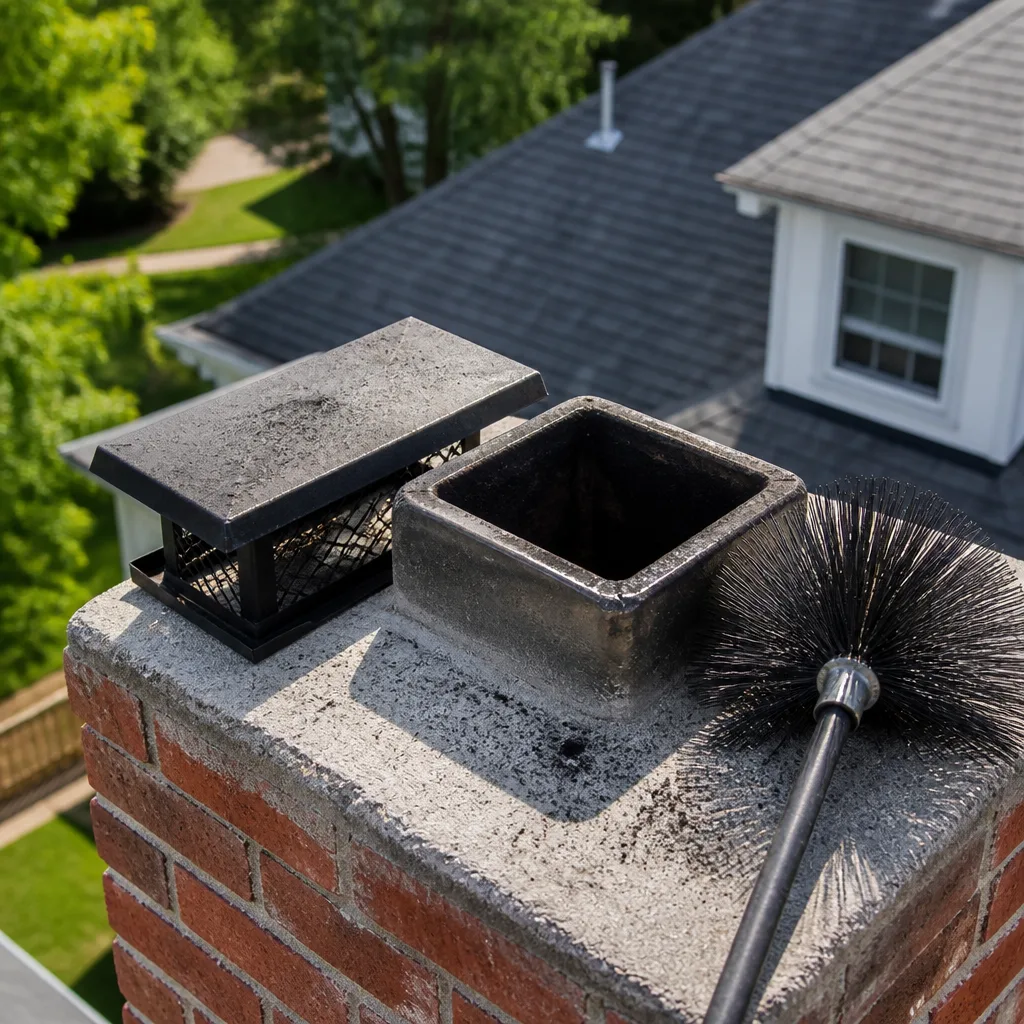
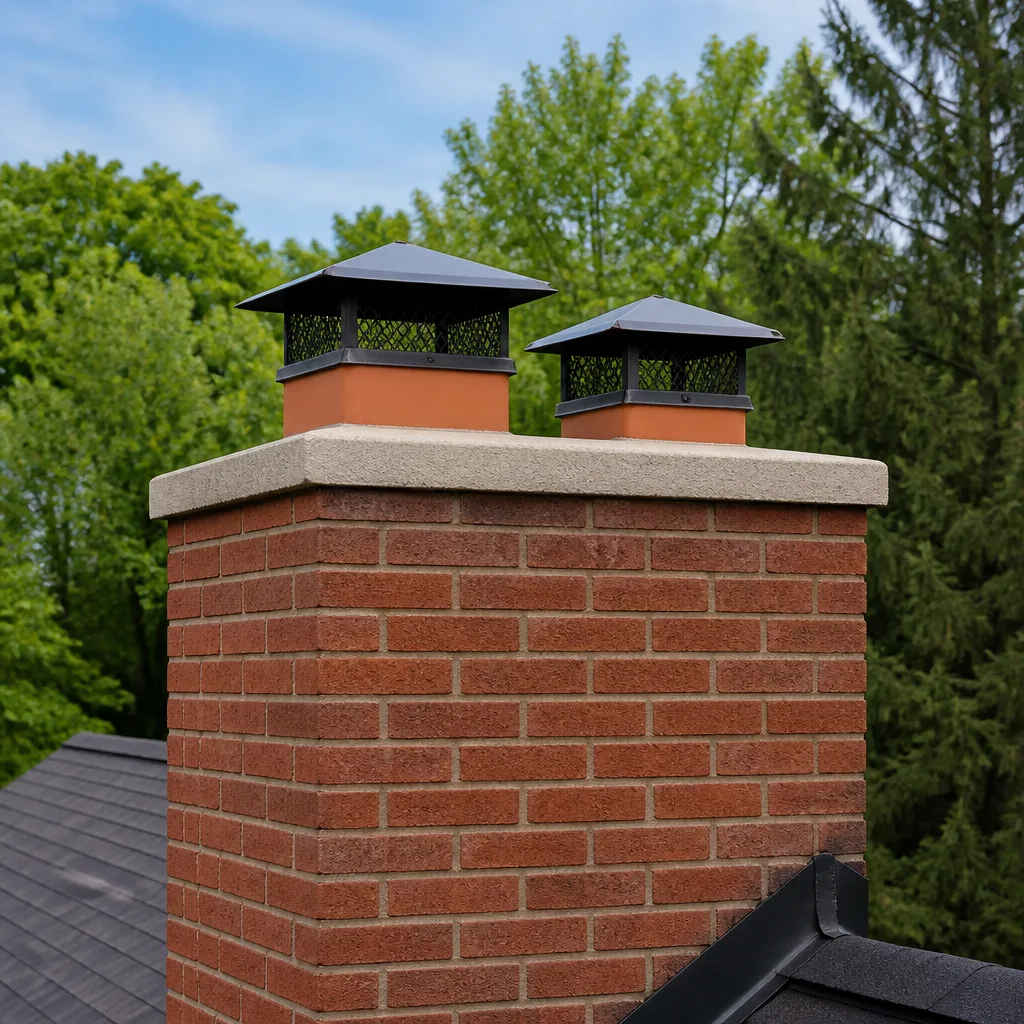
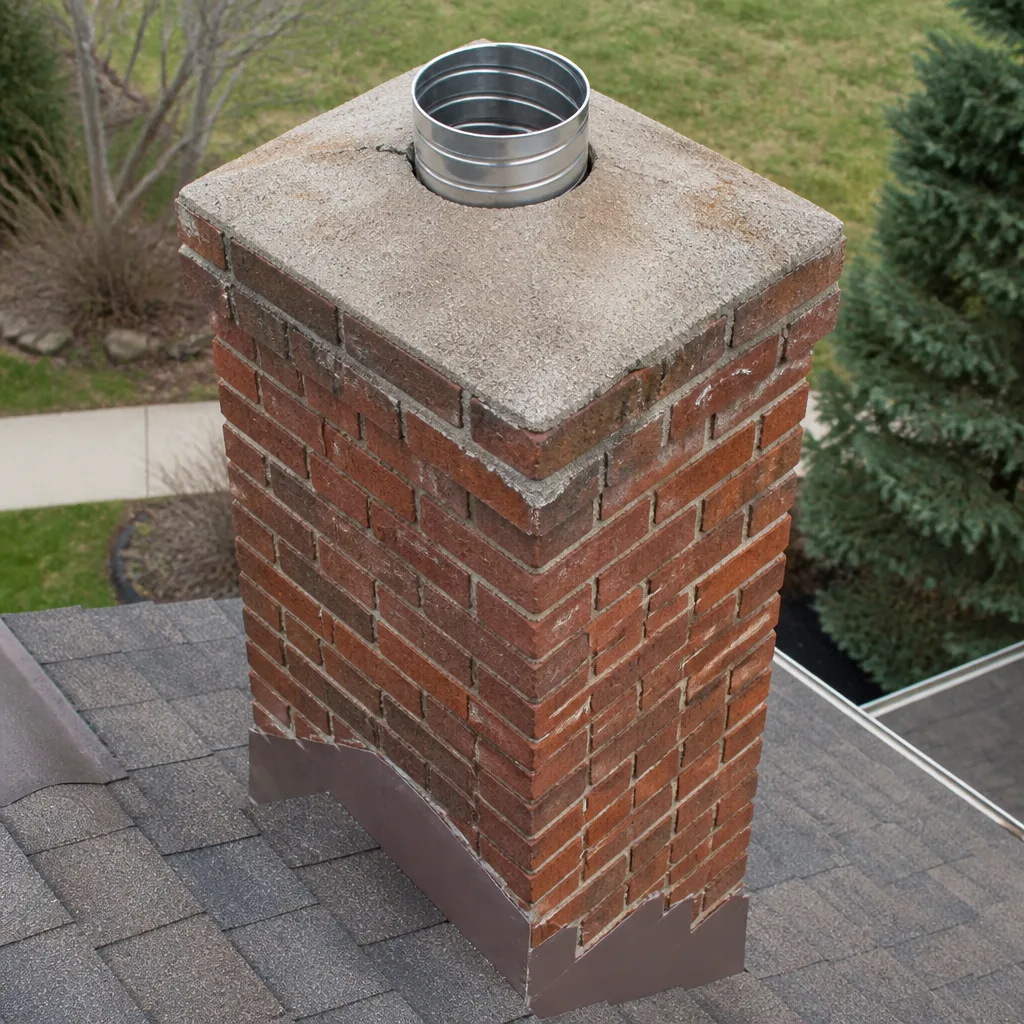
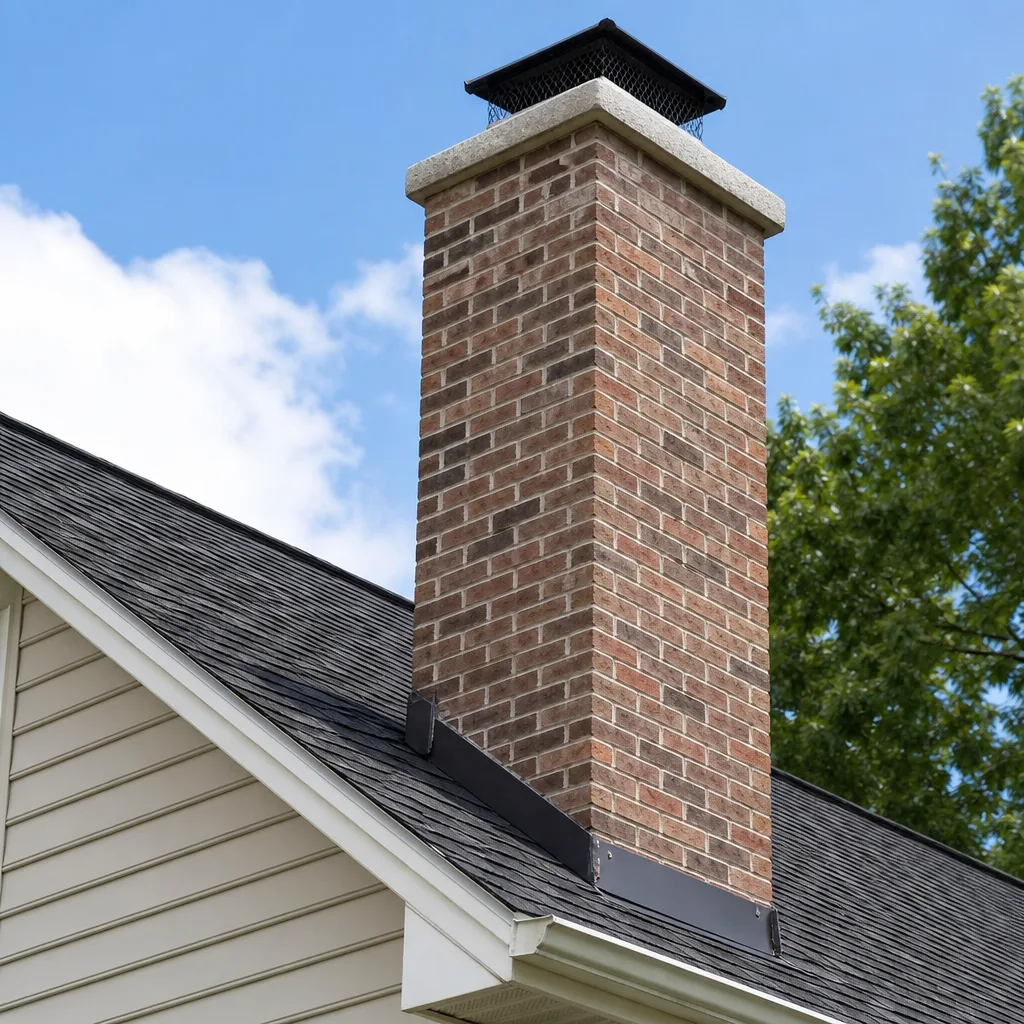
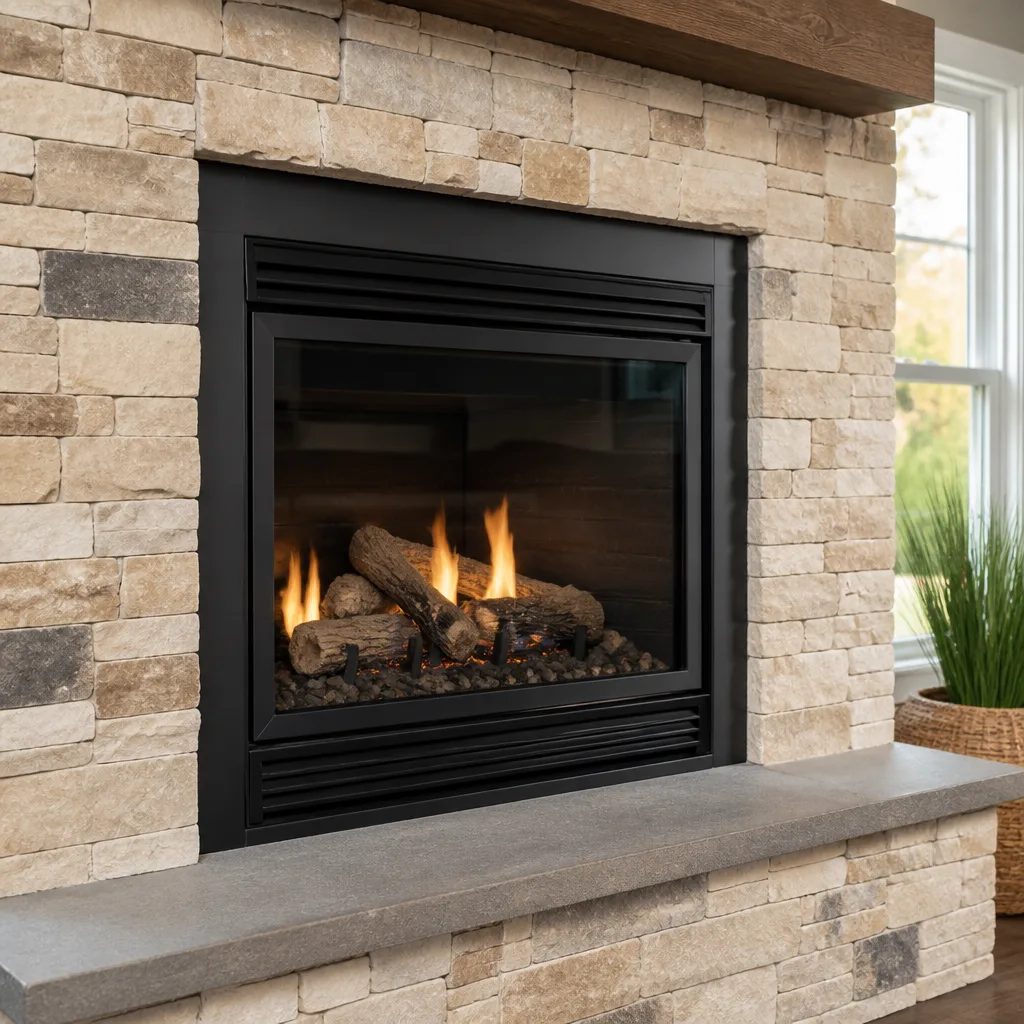
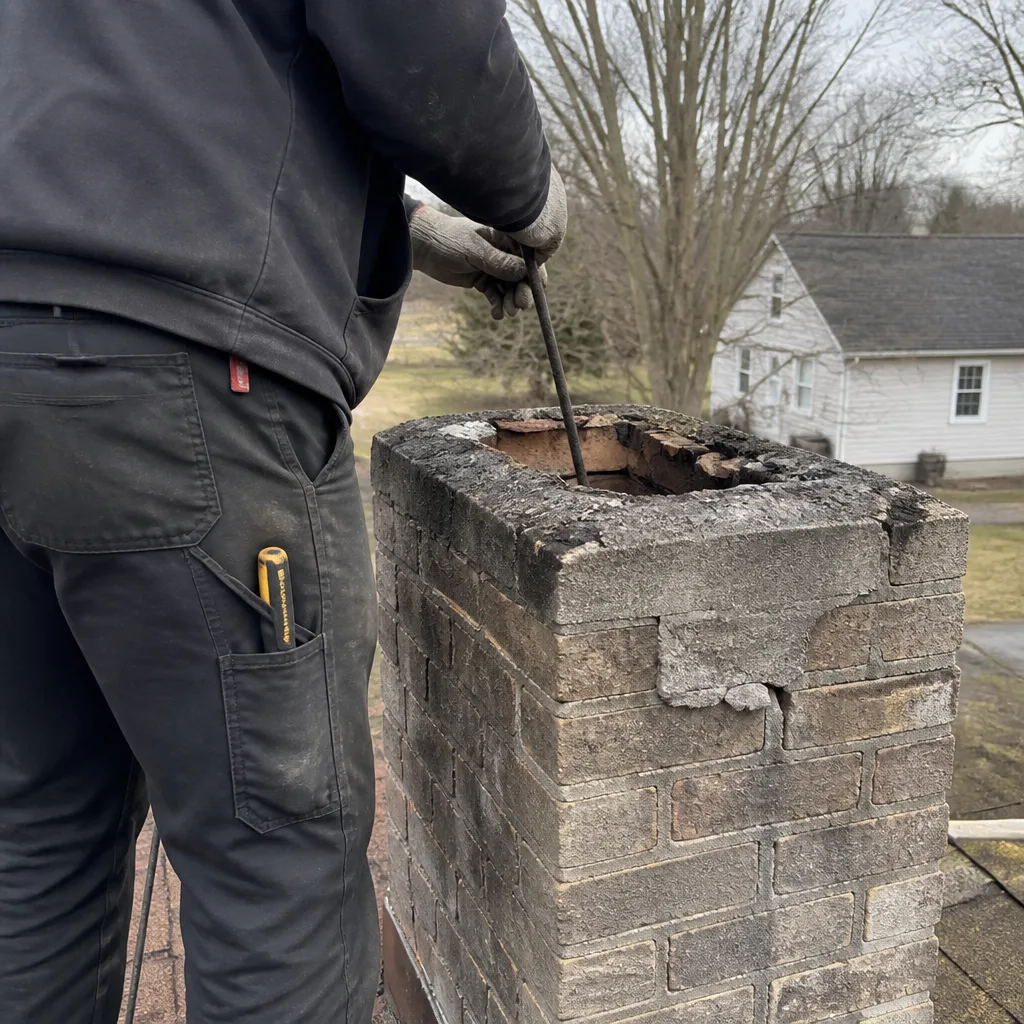 Before
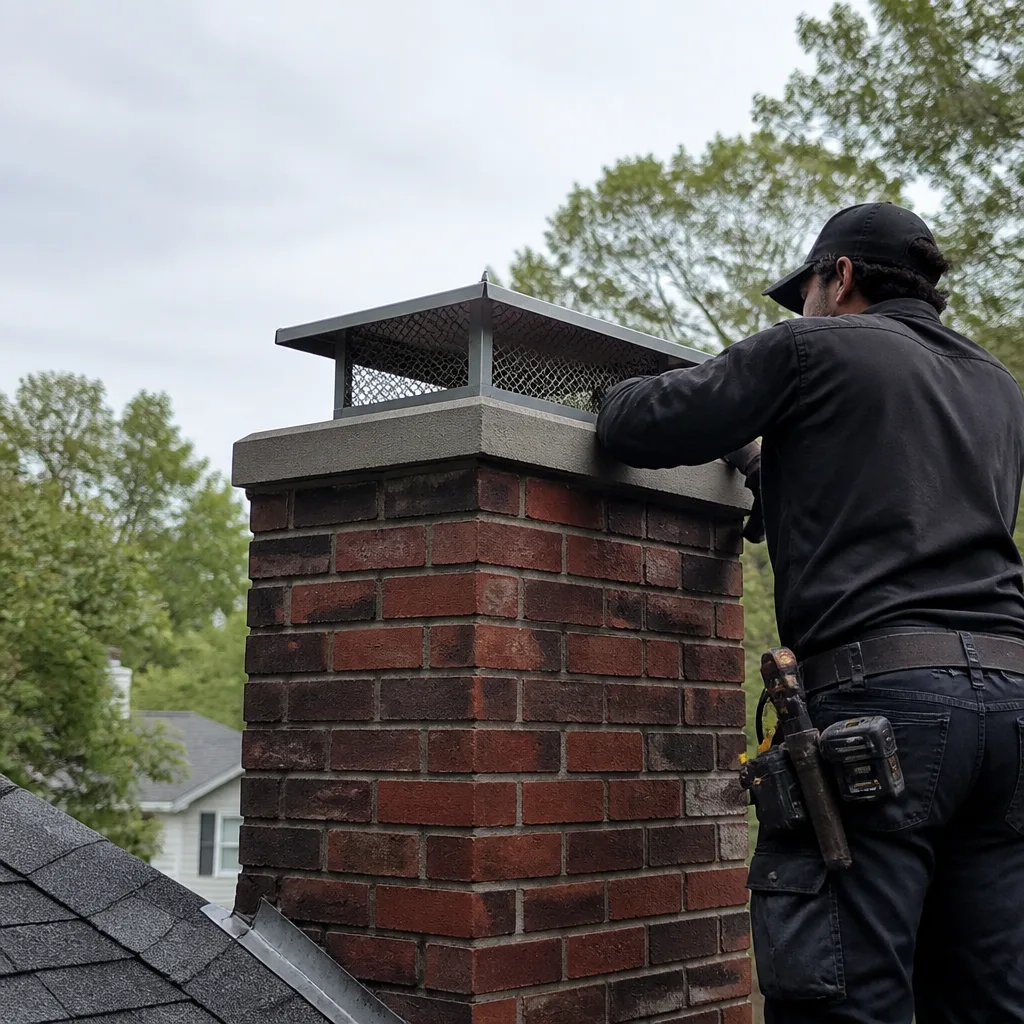 After
After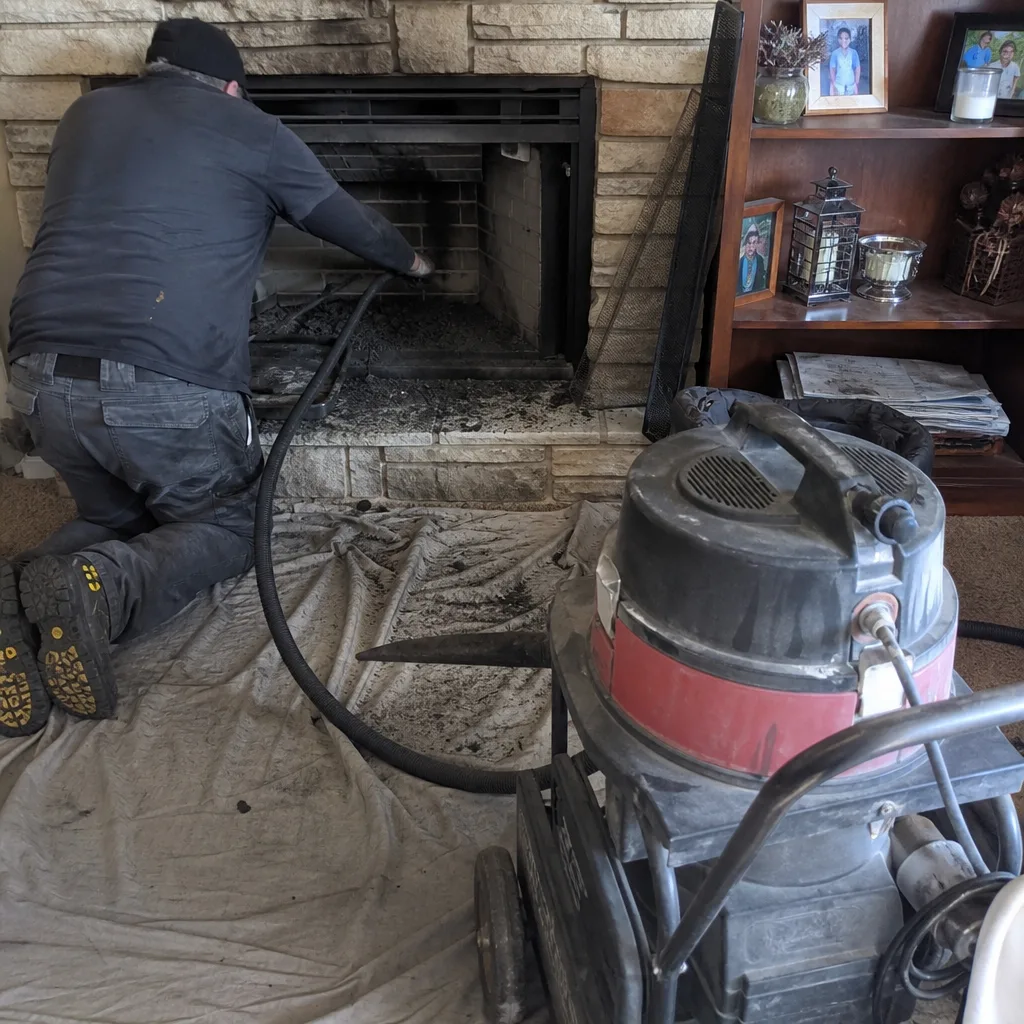 Before
 After
After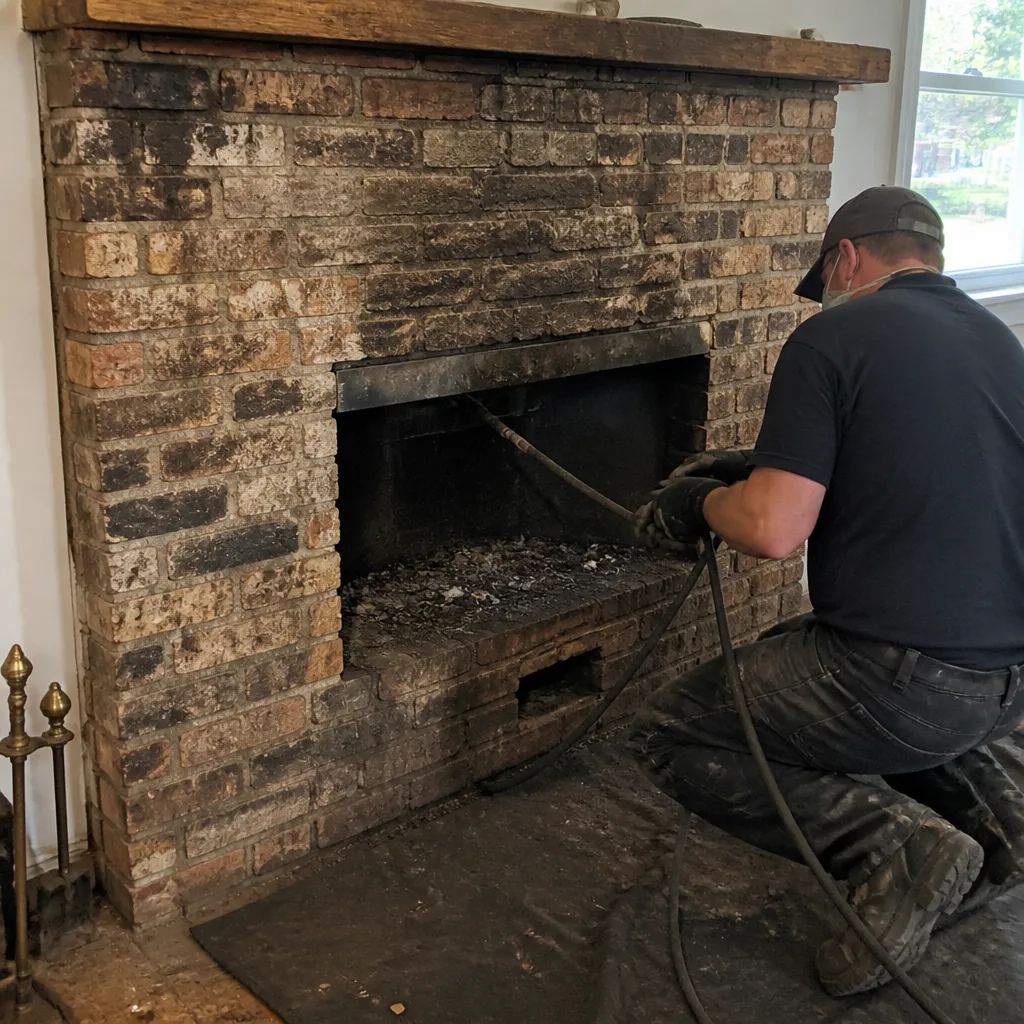 Before
 After
AfterChimney Cleaning Warning Signs: A Crystal Lake Homeowner’s Reference Guide
Most house fires in Crystal Lake that start in a chimney don’t begin with a dramatic event. They begin with a homeowner who smelled something odd in July, noticed smoke drifting sideways instead of up, or saw white powder on the brickwork and told themselves they’d keep an eye on it. In our experience inspecting more than 38,000 chimneys since 2009, the expensive repairs and the dangerous ones almost always had an early signal that went unnamed. This guide gives you the vocabulary to recognize what your chimney is telling you, ranked by what to do about it, and points you to more guides & resources for ongoing maintenance.
Quick Answer
The most critical chimney warning signs for Crystal Lake homeowners are: a campfire or asphalt odor from a cold fireplace (indicates glazed creosote and possible liner damage), smoke rolling back into the room (blockage or downdraft failure), and white or black staining on exterior masonry (active water intrusion). Functional signs like slow smoke clearing or a delayed draft on startup mean schedule a sweep within two weeks-our The Complete Guide to Chimney Cleaning in Crystal Lake explains what that service should include. Cosmetic signs like minor exterior brick weathering mean monitor annually. If you smell gas or see flames outside the firebox, stop using the system immediately and call a professional.
Table of Contents
- The Tiered Warning Sign Index: Cosmetic, Functional, and Immediate
- Odor Signals: What Your Fireplace Smells Like and Why It Matters
- Reading Smoke Behavior During a Fire
- White vs. Black Staining: Decoding Exterior Masonry Signals
- Delayed Draft: The Carbon Monoxide Risk Most Homeowners Miss
- Why Dormancy Doesn’t Fix Chimney Problems
- Common Mistakes to Avoid
- When to Call a Professional
- Frequently Asked Questions
BeforeAfterThe Tiered Warning Sign Index: Cosmetic, Functional, and Immediate
Not every warning sign demands the same response. We’ve organized what we see in Crystal Lake homes into three tiers based on urgency and the underlying physics.
Cosmetic: Monitor and Document
These signs indicate normal weathering or minor conditions that should be tracked during your annual inspection but don’t require immediate action.
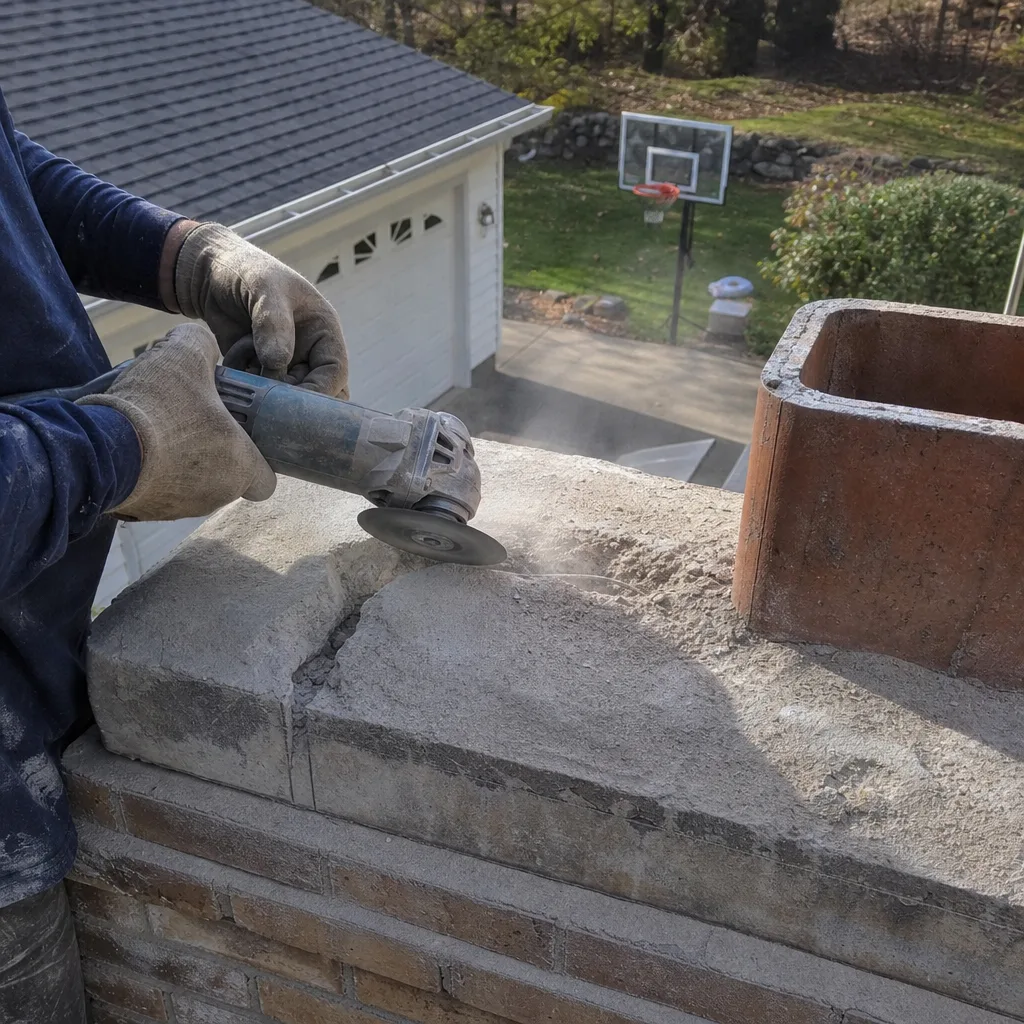
- Minor spalling on the chimney crown surface – Small flakes of concrete loosening from the crown’s top layer. In Crystal Lake’s freeze-thaw cycle, this is nearly universal on crowns older than ten years. Document the area with a photo and compare year over year.
- Faint efflorescence on the lower chimney courses – A powdery white residue that brushes off easily. This is salt migration from mortar, not structural damage, but it confirms water is moving through the masonry.
- Slight mortar joint recession – Joints that have eroded to 3/8-inch depth or less. Repointing can wait until it reaches 1/2-inch, but don’t let it go beyond two heating seasons.
Functional: Schedule Within Two Weeks
These signs mean the chimney’s performance is compromised and will degrade further with use. Operating the system adds risk, but a single evening’s fire is unlikely to cause catastrophic failure.
- Smoke that clears slowly from the firebox after the fire dies – Indicates restricted flue airflow, often from Class II or III creosote buildup or a partially collapsed clay flue liner.
- Delayed draft on startup – The fire smokes into the room for 30-90 seconds before establishing upward flow. This is a carbon monoxide exposure window, especially in tightly sealed Crystal Lake homes built after 2010.
- Visible creosote flakes in the firebox after burning – Pieces of black, shiny material that look like burnt plastic. This is Stage 2 creosote shedding from the flue walls; the remaining deposit is likely glazed and requires mechanical removal.
Immediate: Stop Using the Fireplace Now
These conditions create imminent fire or poisoning risk. Do not operate the system until a Level 2 inspection with camera scan confirms safety.
- Campfire or asphalt odor from a cold fireplace in warm weather – Stage 2 creosote is off-gassing through liner cracks. The flue has already experienced temperatures hot enough to volatilize deposits, which means the liner’s integrity is compromised.
- Smoke rolling continuously into the room during active burning – Complete draft failure, often from blockage (bird nest, collapsed liner section) or a severely compromised flue.
- Black, oily staining on exterior masonry below the roofline – Condensed creosote or combustion byproducts migrating through the chimney wall, indicating a breach in the flue liner.
- Any visible flame or glowing material outside the firebox – Structural fire in progress. Evacuate and call emergency services.
In the Ridgeview and Coventry neighborhoods, where many homes were built during the 1990s construction boom, we see functional-tier signs progress to immediate-tier faster than owners expect. The clay flue liners in that era were often single-wall and undersized for modern fireplace inserts.
Odor Signals: What Your Fireplace Smells Like and Why It Matters
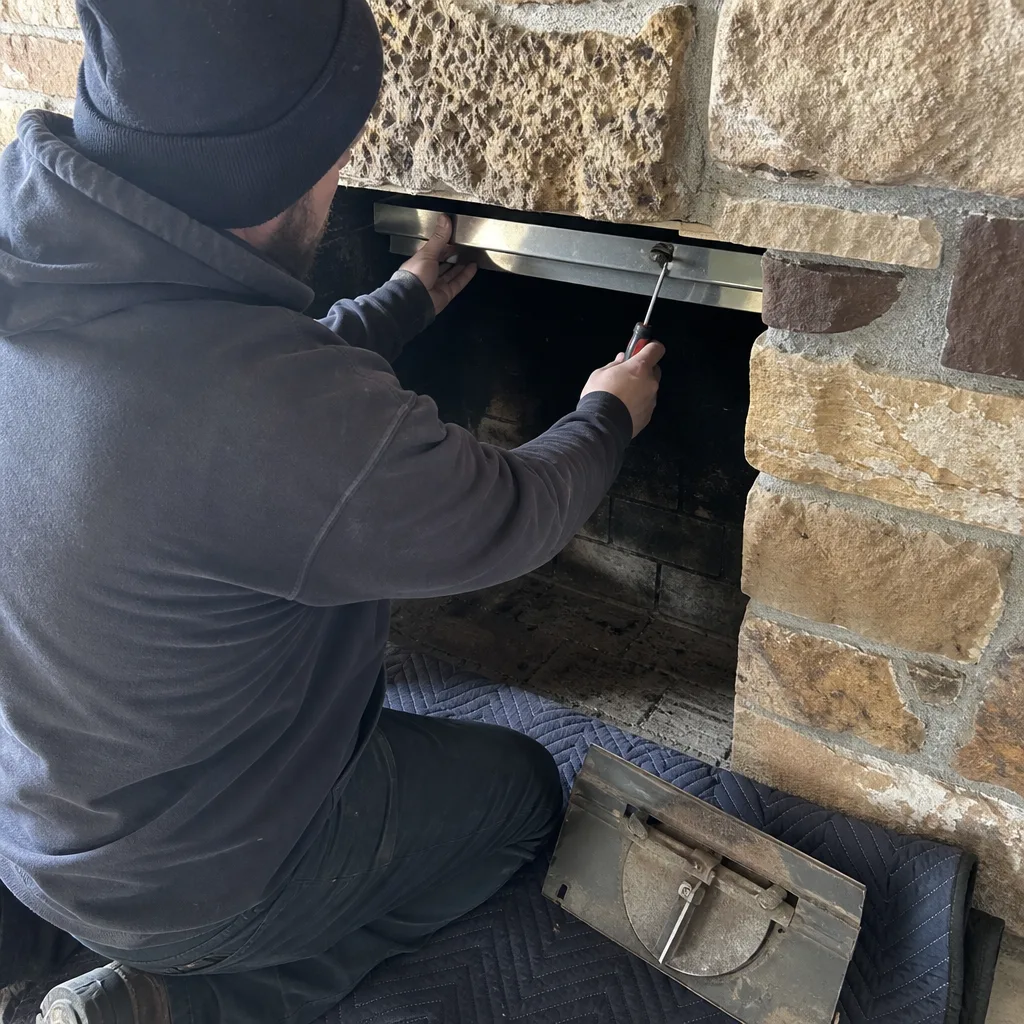
The smell of asphalt or a campfire coming from a cold fireplace on a summer day is not a ventilation quirk. It is Stage 2 creosote off-gassing through liner cracks, and it means the flue has already been running hot enough to bake deposits into a glazed layer that a brush cannot remove.
Here’s how to interpret what you’re smelling:
Campfire or Asphalt Odor (Warm Weather)
This is the most dangerous smell a chimney can produce. Stage 2 creosote, also called glazed creosote, forms when flue temperatures exceed 1,000°F repeatedly. The deposits melt, flow, and resolidify into a hard, enamel-like coating. When outdoor temperatures rise in Crystal Lake’s humid summers, the material expands and releases hydrocarbon vapors through any available opening, including hairline cracks in a clay liner or gaps at the thimble connection.
The odor itself isn’t the hazard. The hazard is that the liner has been thermally stressed enough to crack, and those cracks will widen with the next heating season. A standard wire brush won’t touch glazed creosote. Removal requires rotary mechanical tools, chemical treatment, or in severe cases, liner replacement with a stainless steel system from DuraFlex or Olympia Chimney.
Musty or Damp Earth Smell
Water is in the system. Source possibilities, in order of frequency in Crystal Lake:
- Failed or missing chimney cap – Rain enters the flue directly. We see this most often after winter wind events, which are common in McHenry County’s open terrain.
- Crown cracks allowing bulk water entry – The concrete crown is the chimney’s umbrella. When it cracks, water follows the flue liner surround and saturates the smoke chamber.
- Flashing separation at the roofline – The metal transition between chimney and roof deck has lifted, usually from thermal cycling or improper original installation.
Musty smells that persist into October mean the masonry is still moisture-laden when heating season begins. That moisture converts to steam on first fire, accelerates creosote adhesion, and can cause spalling damage to firebrick.
Sharp, Acrid Chemical Smell
This indicates incomplete combustion, often from burning treated wood, painted scrap, or household trash. The odor is aldehydes and dioxins. More critically, it signals that your fire is running oxygen-starved and cool, which produces maximum creosote deposition. If you smell this during operation, extinguish the fire and evaluate your fuel source and air intake.
Sulfur or Rotten Egg Odor
Natural gas odorant. If you have a gas log set or gas starter, this is a leak in the supply line, valve, or burner assembly. Evacuate immediately without operating any switches. This is not a chimney maintenance issue; it’s a gas emergency.
Every Chimney Cleaning & Sweep in Crystal Lake we perform includes a baseline odor assessment. We ask homeowners what they’ve noticed and when, because the seasonality of smells often reveals the failure mode.
Reading Smoke Behavior During a Fire
Smoke is the visible evidence of draft performance. How it moves tells you what structure is failing. These are the three patterns we teach Crystal Lake homeowners to watch for.
Rollback: Smoke Enters the Room at Firebox Level
Smoke that spills from the firebox opening and rolls across the hearth indicates negative pressure in the house exceeding the chimney’s draft capacity. This is common in Crystal Lake’s newer construction, particularly in the Bowman and Lakewood areas, where airtight envelopes and powerful kitchen range hoods depressurize living space.
But rollback can also mean physical blockage. A bird nest in the flue, a collapsed clay liner section, or severe creosote buildup can reduce flue capacity below the volume of smoke produced. The diagnostic test: open a window near the fireplace six inches. If rollback stops, it’s a pressure issue. If it continues, it’s a blockage issue. Either way, the fire should not be operated until resolved.
Slow Clearing: Smoke Lingers in the Firebox After the Fire Dies
A healthy chimney clears residual smoke within 2-3 minutes of flameout. If smoke hangs in the firebox for ten minutes or more, the flue is restricted. Causes we find most often:
- Class III creosote – The most advanced stage, a tar-like deposit that can reduce flue diameter by 25% or more. This requires chemical treatment and mechanical removal; standard sweeping is insufficient.
- Liner offset or joint separation – Clay flue liners are installed in sections. When mortar between sections fails, smoke eddies at the offset instead of flowing smoothly upward.
- Smoke chamber slope failure – The smoke chamber, the area above the damper that funnels smoke into the flue, should have smooth parged surfaces. When parging falls away, turbulence traps smoke.
Directional Drift: Smoke Exits at an Angle or Pulses
Smoke that exits the chimney top at a sharp angle, or that appears to pulse rather than flow steadily, indicates wind-induced downdraft or competing flue interaction. In Crystal Lake’s McHenry County location, prevailing westerlies interact with rooflines to create pressure zones that can override normal draft. A properly sized chimney cap with directional vents, sourced through our Haven buying network from Famco or Copperfield, often resolves this. But directional drift can also mean the chimney is too short for its exposure, a code compliance issue we see in ranch-style homes with single-story additions.
Document what you see. A video of smoke behavior during different wind conditions gives us diagnostic information that saves an hour of investigation.
White vs. Black Staining: Decoding Exterior Masonry Signals
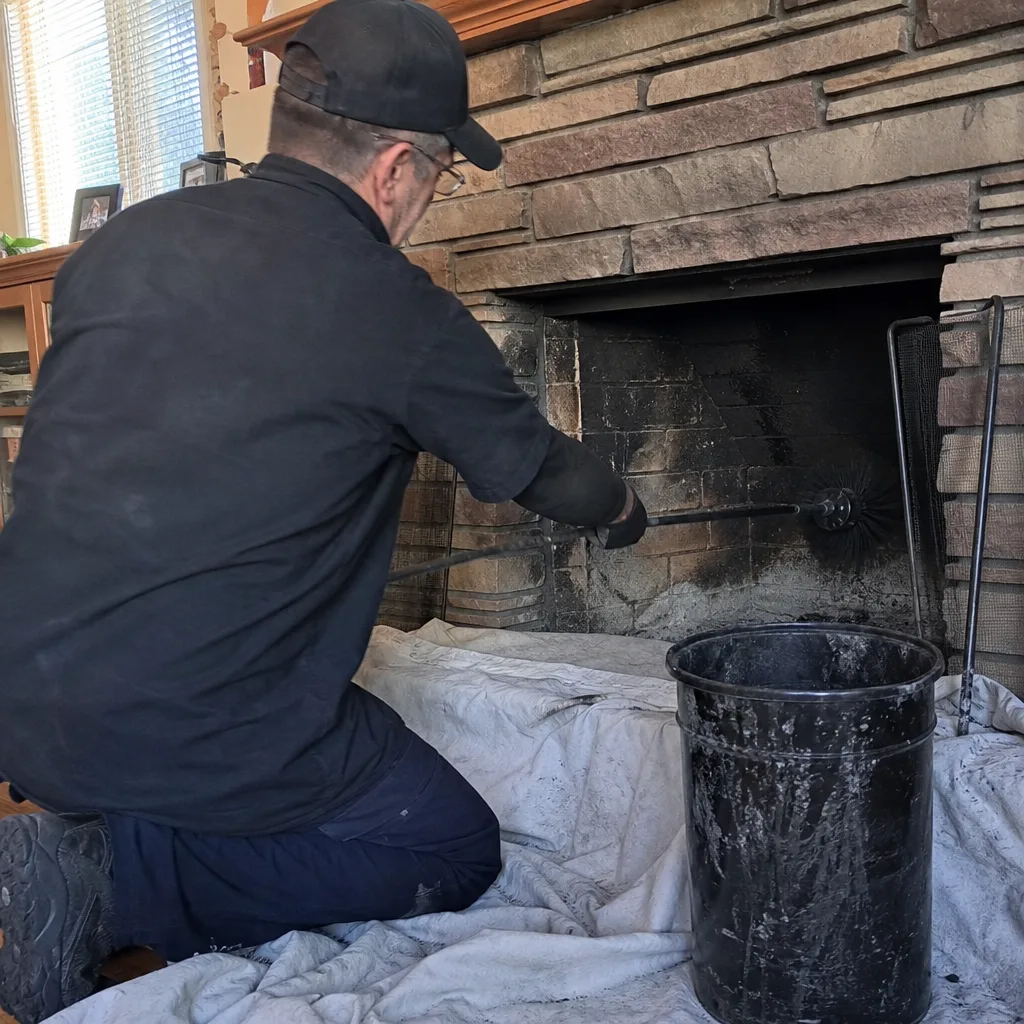
Staining on the outside of your chimney is not cosmetic. It is the chimney’s exterior reporting on conditions inside. The color tells you the mechanism.
White Staining: Efflorescence
Efflorescence is a white, powdery deposit of soluble salts that migrate through masonry and crystallize on the surface. It brushes off easily and will reappear after rain. What it means: water is moving through the masonry from the inside out.
In Crystal Lake, we see efflorescence most often on the south and west exposures, where freeze-thaw cycling is most aggressive. The source is almost always crown failure or upper mortar joint erosion. Water enters at the top, saturates the masonry, dissolves salts from the mortar and brick, and transports them to the surface. The presence of efflorescence below the roofline, on the main chimney stack, confirms that water is traveling the full height of the structure.
Efflorescence itself doesn’t damage masonry. But the water movement that causes it does. Each freeze-thaw cycle expands water 9% in volume, progressively fracturing brick faces and mortar joints. What begins as white powder ends as spalled brick and compromised structural integrity.
Black Staining: Creosote Migration or Combustion Byproducts
Black or dark brown staining, often oily to the touch, indicates that combustion byproducts are migrating through the chimney wall. This is a flue liner breach, and it is always an immediate-tier condition.
The mechanism: a crack, gap, or missing section in the flue liner allows smoke and creosote to enter the chimney’s interior cavity. Because this cavity is not designed to contain combustion gases, the byproducts condense on the interior face of the brick and migrate to the exterior surface, where they appear as black staining. The stain pattern often traces the path of the flue liner: vertical on the chimney face, sometimes with horizontal spread at mortar joint lines where the cavity is most permeable.
Black staining below the damper level, visible in the basement or at the cleanout door, indicates a breach in the lower flue or smoke chamber. This is the most dangerous configuration because it places combustion gases in direct contact with framing members and living space.
Green or Brown Biological Growth
Moss, algae, or lichen on masonry confirms chronic moisture saturation. The masonry is wet enough, often enough, to support plant colonization. In shaded yards common in Crystal Lake’s older neighborhoods near the lake, north-facing chimneys can show significant biological growth within five years of crown failure. The growth itself isn’t structurally threatening, but it holds moisture against the masonry and accelerates freeze-thaw damage.
We document all staining during our Chimney Repair in Crystal Lake assessments with dated photos, included under Haven Standard Clause 4. Comparing year-over-year images tells us whether a condition is stable or progressive.
Delayed Draft: The Carbon Monoxide Risk Most Homeowners Miss
Delayed draft is the condition where smoke and combustion gases enter the room for 30-90 seconds after lighting the fire, before the chimney establishes upward airflow. Homeowners often describe it as “the smoke has to warm up the chimney first.” That description is physically wrong and dangerously reassuring.
What Delayed Draft Actually Is
A chimney drafts because warm air is less dense than cool air. The column of air in the flue, when heated, becomes buoyant and rises, creating suction at the firebox. For this to work reliably, the flue must be:
- Warm enough that the temperature differential produces adequate buoyancy
- Unobstructed enough that airflow isn’t restricted
- Tall enough that the pressure differential overcomes any negative pressure in the house
Delayed draft means one of these conditions is failing. In Crystal Lake’s 2015-2025 construction, we most often see it from negative house pressure. Modern HVAC systems, range hoods, and dryer vents exhaust air that must be replaced. In a tight envelope, replacement air enters wherever it can, including down the chimney. The fireplace competes with the house for makeup air, and loses until the flue temperature differential becomes strong enough to overcome the pressure imbalance.
Why It’s a Carbon Monoxide Risk, Not a Cleaning Problem
During the delay period, combustion is incomplete because exhaust gases aren’t being drawn away efficiently. Incomplete combustion produces carbon monoxide, not carbon dioxide. CO is odorless, colorless, and binds to hemoglobin 240 times more readily than oxygen.
The risk is highest in the first ten minutes of operation, precisely when homeowners are still in the room adjusting the fire. If the delay is 60 seconds and you light fires 100 times per heating season, you’ve had 100 minutes of elevated CO exposure at the hearth. This is why we treat delayed draft as a system design issue, not a maintenance issue. Cleaning the flue may improve airflow, but it won’t correct house pressure or inadequate flue height.
The Diagnostic Protocol
When we investigate delayed draft, we measure:
- House pressure relative to outdoors, with all exhaust appliances operating
- Flue draft pressure at startup and steady-state
- CO levels at the firebox opening during the delay period
- Flue gas temperature and analysis
Solutions range from a dedicated outside air duct to the firebox (code-required in new construction, often omitted in retrofits), to chimney height extension, to pressure-balanced ventilation design. We quote every solution in writing before work begins, with a written warranty, per Haven Standard Clause 1.
Our Fireplace Services in Crystal Lake include combustion analysis and draft testing as standard, not as add-ons.
Why Dormancy Doesn’t Fix Chimney Problems
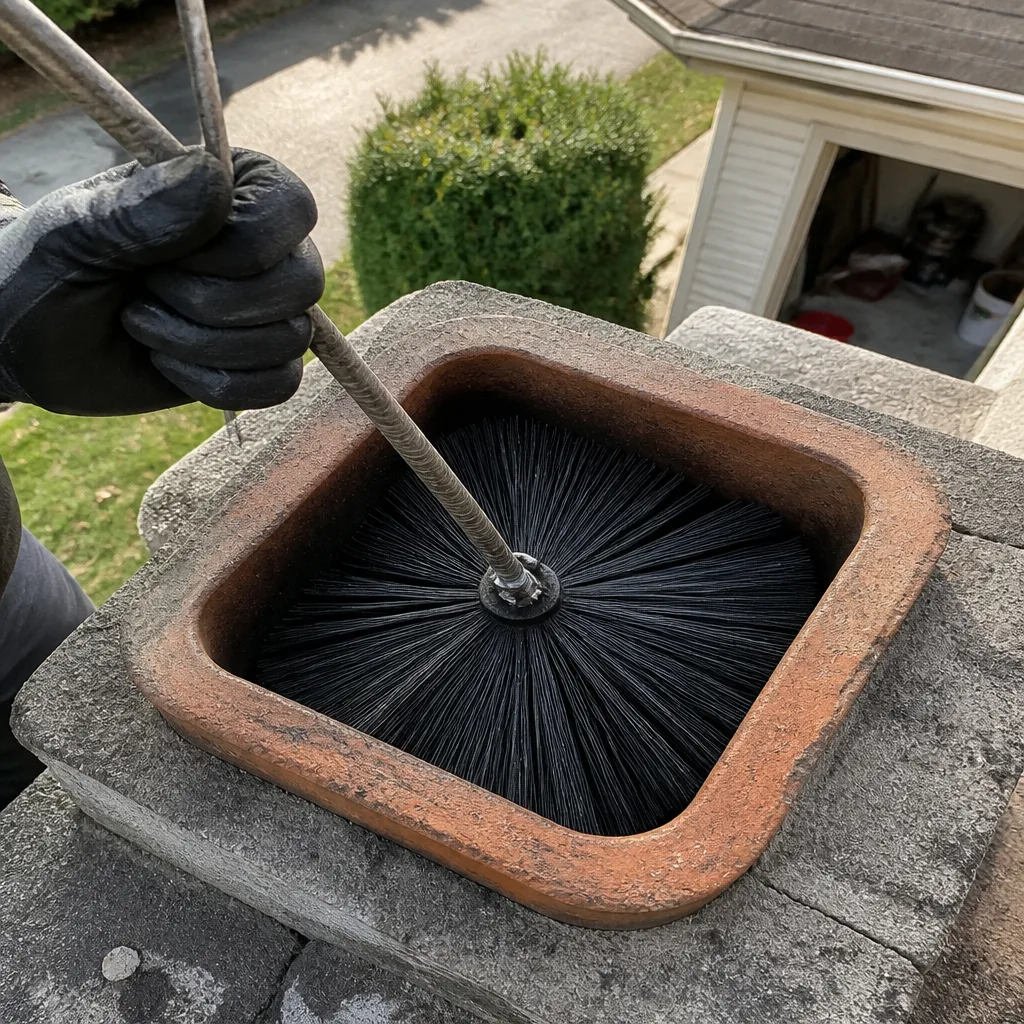
The most expensive mistake we see in Crystal Lake is the homeowner who notices a warning sign, stops using the fireplace for a season, and assumes the problem has resolved-a dilemma we explore in DIY vs Professional Chimney Cleaning: The Crystal Lake Homeowner’s Decision Guide. It hasn’t. In most cases, dormancy makes it worse.
The Physics of Why Problems Worsen in Disuse
Chimney systems are designed for thermal cycling. When operated regularly, the flue liner expands and contracts within a controlled range. Masonry dries between fires. Creosote deposits remain relatively soft and removable. Water that enters evaporates during warm flue periods.
When dormant:
- Moisture accumulates without evaporation – A single chimney cap failure can introduce gallons of water per year. In a dormant chimney, that water saturates masonry, degrades mortar, and accelerates liner corrosion in metal systems.
- Creosote hardens further – Stage 2 creosote continues to cure and oxidize. What might have been removable with rotary tools after one season becomes a liner-encasing shell that requires replacement after two.
- Clay liner cracks propagate – Thermal stress from occasional use actually keeps clay liners from settling into a fully contracted state. Complete dormancy allows cracks to stabilize open, making them more susceptible to freeze-thaw widening.
- Animal intrusion goes undetected – A chimney without occasional smoke and heat becomes attractive nesting habitat. Squirrels, raccoons, and chimney swifts in Crystal Lake’s wooded areas commonly block flues in unused systems.
The Specific Crystal Lake Pattern
We see this pattern repeatedly in lake-area homes used seasonally or in rental properties between tenants. The owner notices smoke backup in March, closes the damper, and doesn’t reopen it until November. By then, a minor liner crack has admitted enough water to spall the smoke chamber, or a squirrel nest completely blocks the flue.
The inspection that would have cost $200-$300 in spring becomes a $2,400 liner replacement in fall, often with water damage to adjacent framing. Under Haven Standard Clause 4, we maintain photo records that let us show homeowners exactly how conditions progressed, season to season, when they had us document the system and then delayed action.
If you’re not using the system, that’s precisely when inspection is most valuable. A documented baseline with no thermal masking lets us see cracks, gaps, and intrusions that active use might obscure.
Common Mistakes to Avoid
- Assuming a clean firebox means a clean flue – The firebox is visible and easily brushed. Most dangerous creosote buildup occurs in the flue liner and smoke chamber, areas you cannot see without a camera. We’ve found Class III creosote in flues whose fireboxes looked showroom-ready.
- Using chimney cleaning logs as a substitute for sweeping – These products claim to reduce creosote through chemical action. At best, they convert some deposits to a more brittle form. They do not remove buildup, and they cannot address glazed creosote or liner damage. No product substitutes for mechanical removal and visual verification.
- Hiring based on the lowest coupon price – In Crystal Lake’s competitive sweep market, sub-$100 specials typically involve a flashlight look and a shop-vac run at the firebox. A proper NFPA 211 Level 2 inspection with camera scan takes 45-90 minutes and documents conditions you can see. The cheap sweep misses what costs you later.
- Ignoring seasonal odor changes – A smell that appears only in summer is not “just humidity.” It’s off-gassing from thermally stressed deposits through liner breaches. The seasonality is diagnostic, not dismissible.
- Waiting for “one more season” after noticing a functional-tier sign – Slow smoke clearing, visible creosote flakes, or minor exterior staining never improve with additional use. They progress on a curve that steepens. The cost difference between addressing a condition at functional tier versus immediate tier is typically 3-5x.
- Failing to verify that a sweep includes camera documentation – Without photos, you have no evidence of what was or wasn’t found. Under Haven Standard Clause 4, we’ve included a documented photo record on every job since 2009. If your sweep can’t show you what they saw, they didn’t look.
When to Call a Professional
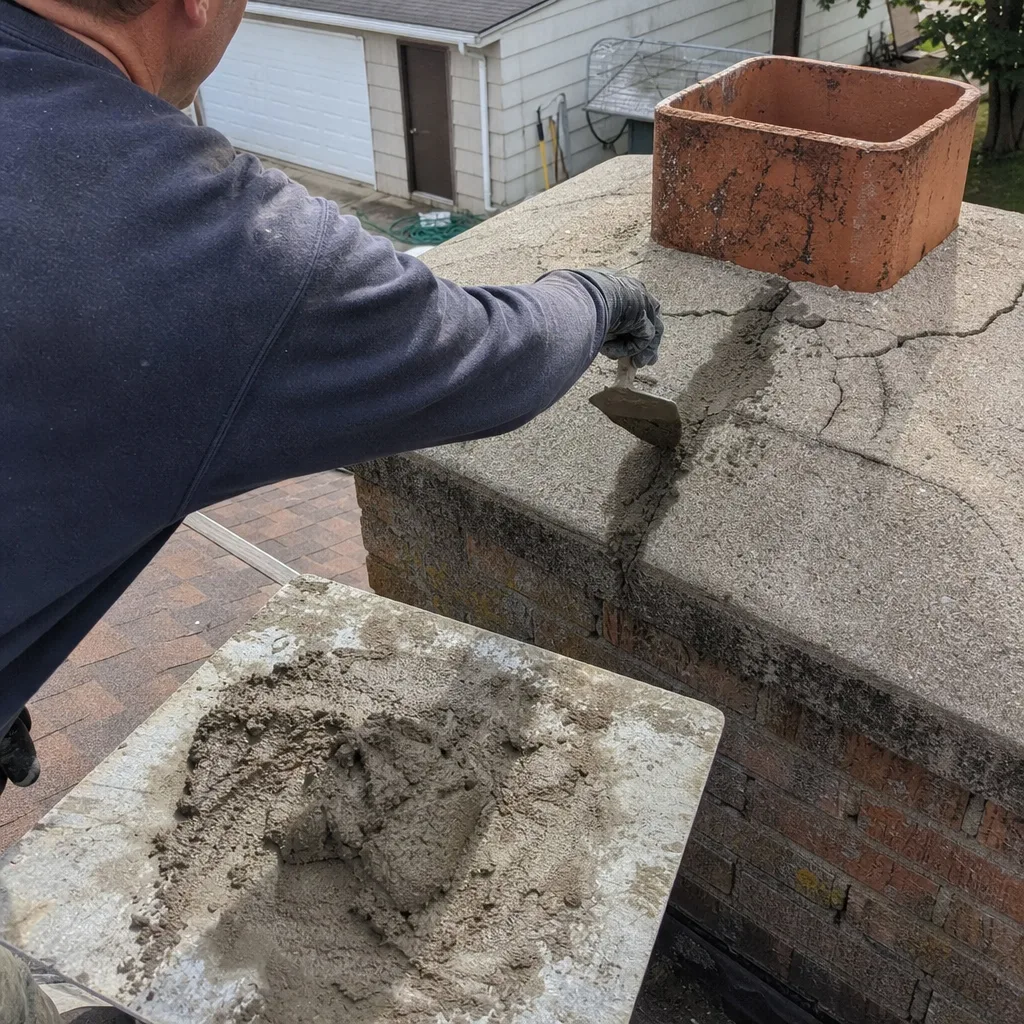
Call for a Level 2 inspection with camera scan if you’ve noticed any functional or immediate-tier sign described in this guide, if it’s been more than 12 months since your last documented inspection, or if you’ve purchased a Crystal Lake home and have no record of prior chimney condition. For help selecting a qualified provider, see How to Hire a Chimney Cleaning Contractor in Crystal Lake: A Step-by-Step Guide. The inspection takes under two hours, produces photos you can review, and gives you a written scope and price for any needed work before anyone starts.
Emberly Chimney Cleaners Crystal Lake offers free estimates in Crystal Lake - call (815) 923-3185. Our technicians are background-checked, uniformed, and assigned by name. You’ll receive a text when yours is en route. Every estimate is written, every job is photographed, and everything is backed by our 365-Day Done Right Promise.
Frequently Asked Questions
A complete chimney cleaning and NFPA 211 Level 2 inspection in Crystal Lake typically ranges from $200 to $350 for a standard wood-burning fireplace system, depending on accessibility, flue configuration, and creosote stage. Multi-flue systems, insert removals, or glazed creosote requiring rotary mechanical cleaning fall at the higher end. We deliver a written price before any work starts - no exceptions, no surprises. Call (815) 923-3185 for an exact quote; estimates are free.
You need a new flue liner if the existing one is cracked, missing sections, or improperly sized for your appliance - and only if those conditions are documented with camera evidence you can see yourself. We do not recommend liner replacement based on age alone. In our 38,000+ inspections, we’ve seen clay liners from the 1960s still serviceable and liners from the 2000s failed from a single chimney fire. The photo record shows you exactly what we found and where. If a competitor recommends liner work without showing you camera documentation, bring us their written estimate for a free second opinion.
NFPA 211 recommends annual inspection for all chimney systems, and cleaning when creosote buildup exceeds 1/8-inch. In Crystal Lake’s climate, where heating season runs October through April and many homeowners burn seasoned hardwood from McHenry County suppliers, most wood-burning systems need sweeping every 1-2 cord equivalents burned. Gas systems need less frequent cleaning but still require annual inspection for proper venting and debris blockage. The specific interval for your system depends on fuel type, burn frequency, and what the camera shows.
Skipped maintenance leads to progressive creosote accumulation, which reduces flue diameter and increases internal temperatures during burning. At sufficient thickness, creosote ignites at temperatures as low as 451°F - a chimney fire that can reach 2,000°F and crack liners, damage masonry, or spread to framing through gaps in the chimney structure. Beyond fire risk, undetected liner damage allows carbon monoxide and combustion moisture into wall cavities, causing rot and poisoning risk. The cost of prevention is a fraction of the cost of remediation; we’ve documented $15,000+ rebuilds that began with skipped $250 sweeps.
Summer odor increase is driven by three factors: higher outdoor humidity reactivates creosote off-gassing, warmer temperatures expand deposits and release trapped volatiles, and reduced indoor air conditioning pressure can reverse subtle draft patterns that would otherwise carry smells upward. In Crystal Lake’s July-August humidity, a chimney with Stage 2 creosote and minor liner cracks becomes a noticeable odor source. The smell is diagnostic of a condition that exists year-round; summer simply makes it perceptible.
You can and should observe smoke behavior, odors, and exterior conditions as described in this guide. But you cannot safely inspect the flue liner, smoke chamber, or interior crown condition without specialized equipment: a chimney camera, proper lighting, and training to interpret what you see. The NFPA 211 Level 2 inspection standard exists because these areas are inaccessible and because misinterpretation has consequences. We’ve seen homeowners mistake a completely detached liner section for “normal roughness.” The camera and the trained eye are not optional for safety-critical evaluation.
The Bottom Line
Your chimney communicates continuously through odor, smoke behavior, and visible change. The signals are specific, interpretable, and tiered by urgency. What most Crystal Lake homeowners lack is the vocabulary to name what they’re seeing and a documented record to track change over time. This guide provides the vocabulary. Our inspection protocol, unchanged since 2009 and formalized as Haven Standard Clause 4, provides the record. The combination lets you make informed decisions about when to monitor, when to schedule, and when to stop using the system entirely. Warning signs don’t resolve on their own. They resolve when someone names them, documents them, and addresses them with a written plan.
Emberly Chimney Cleaners Crystal Lake home
Written by Corrine Halstead, Owner at Emberly Chimney Cleaners Crystal Lake, serving Crystal Lake since 2009.