
Level 1 sweep and inspection to the NFPA 211 annual standard - flue, crown, cap, and flashing checked and photographed
Chimney sweep logs do not sweep chimneys. They loosen some creosote - which then falls where a brush and vacuum still have to collect it.
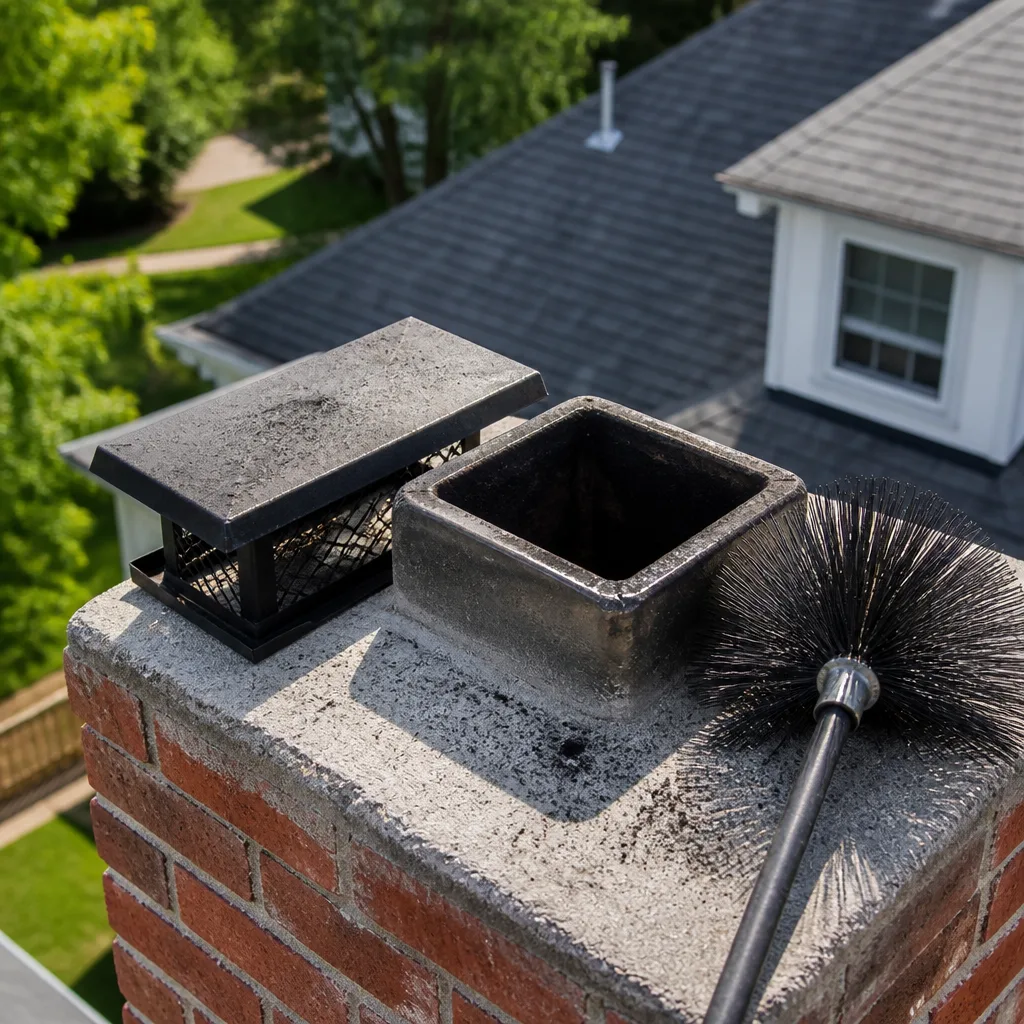
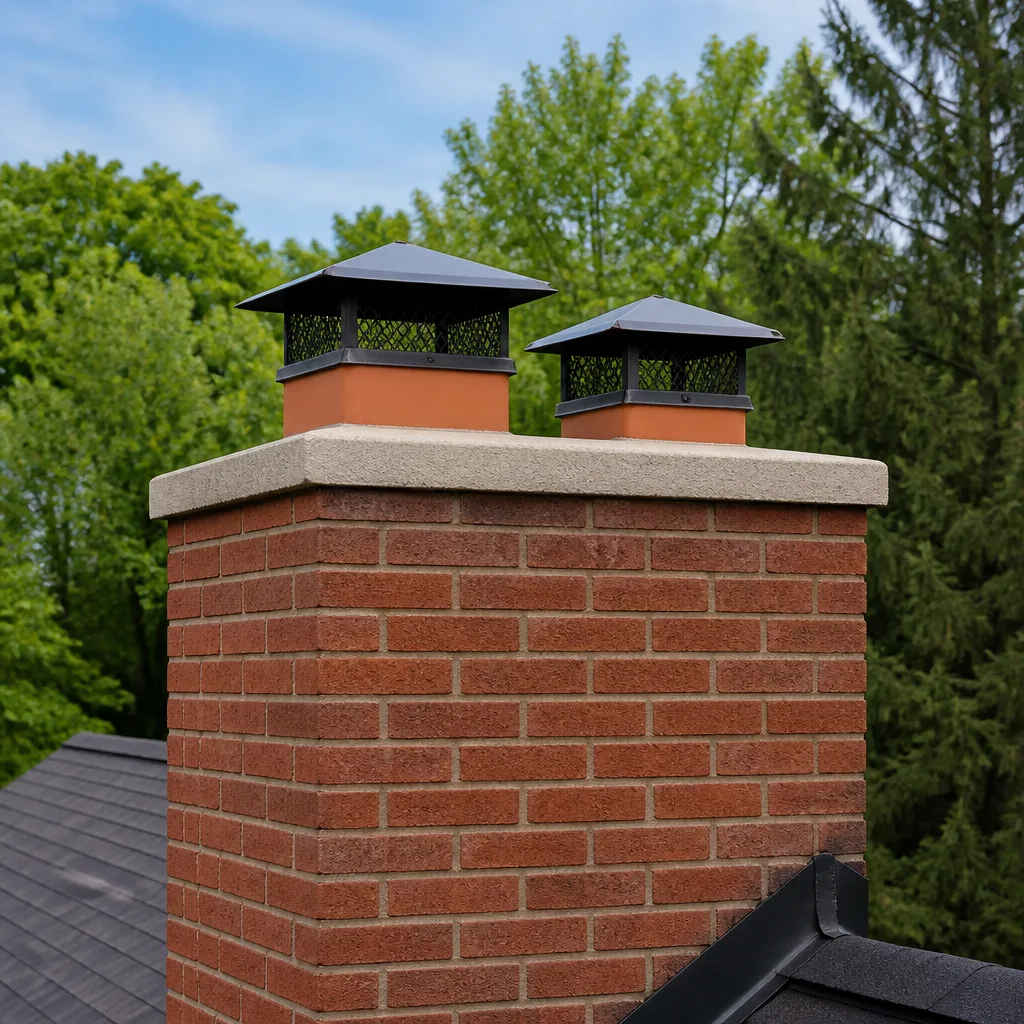
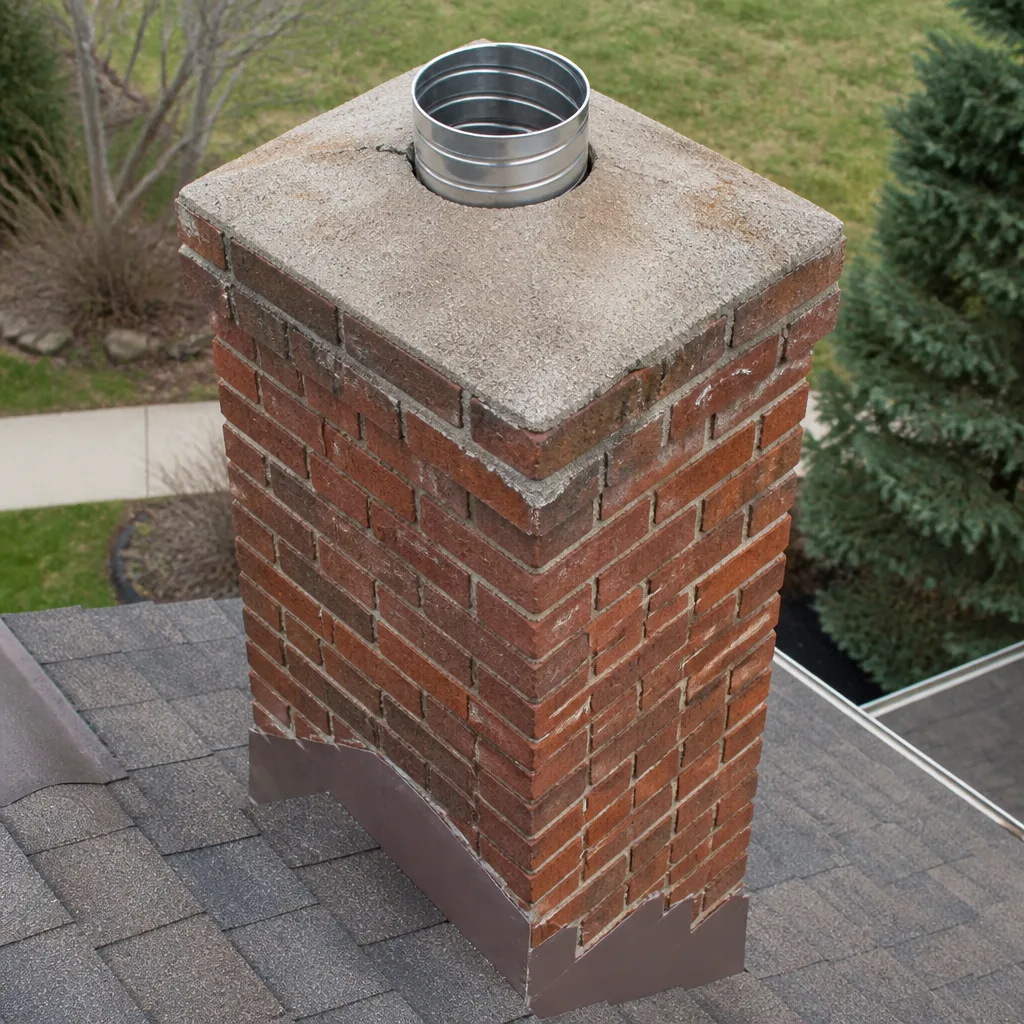
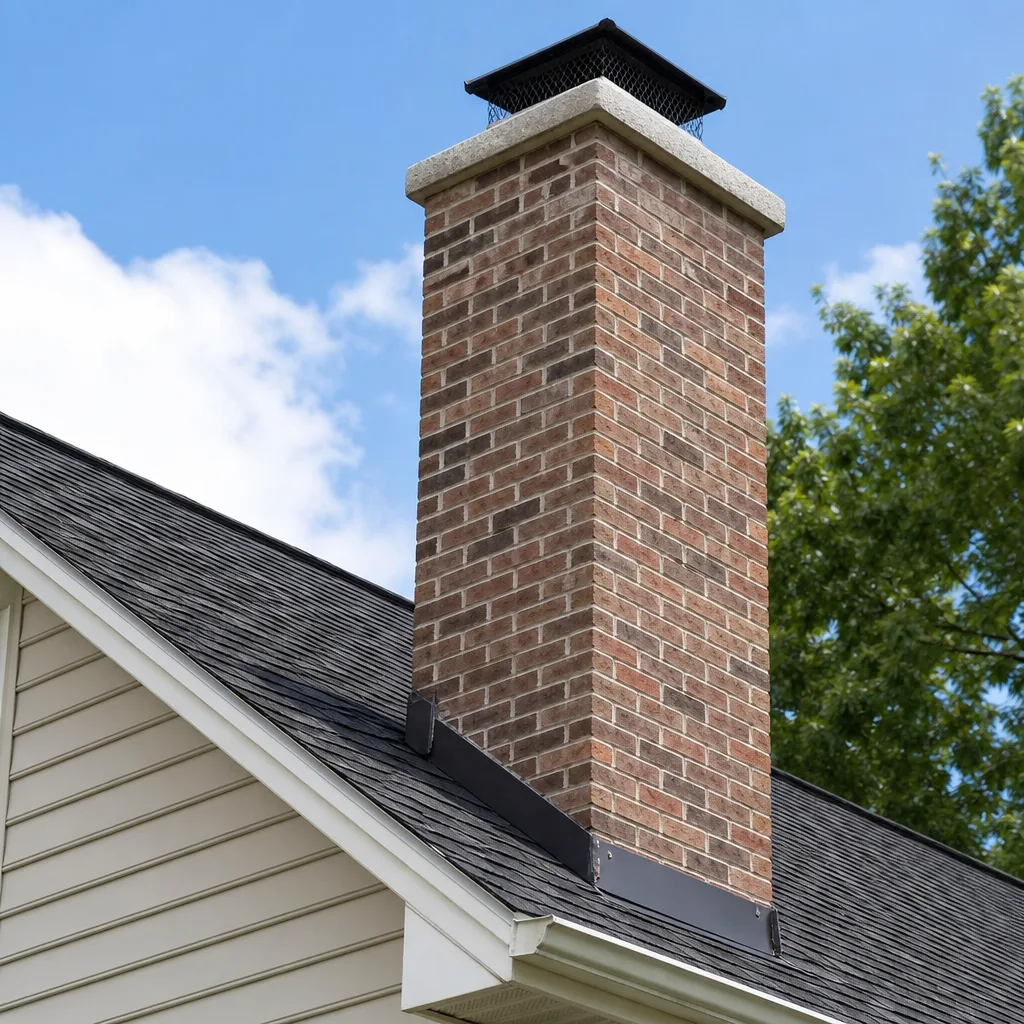
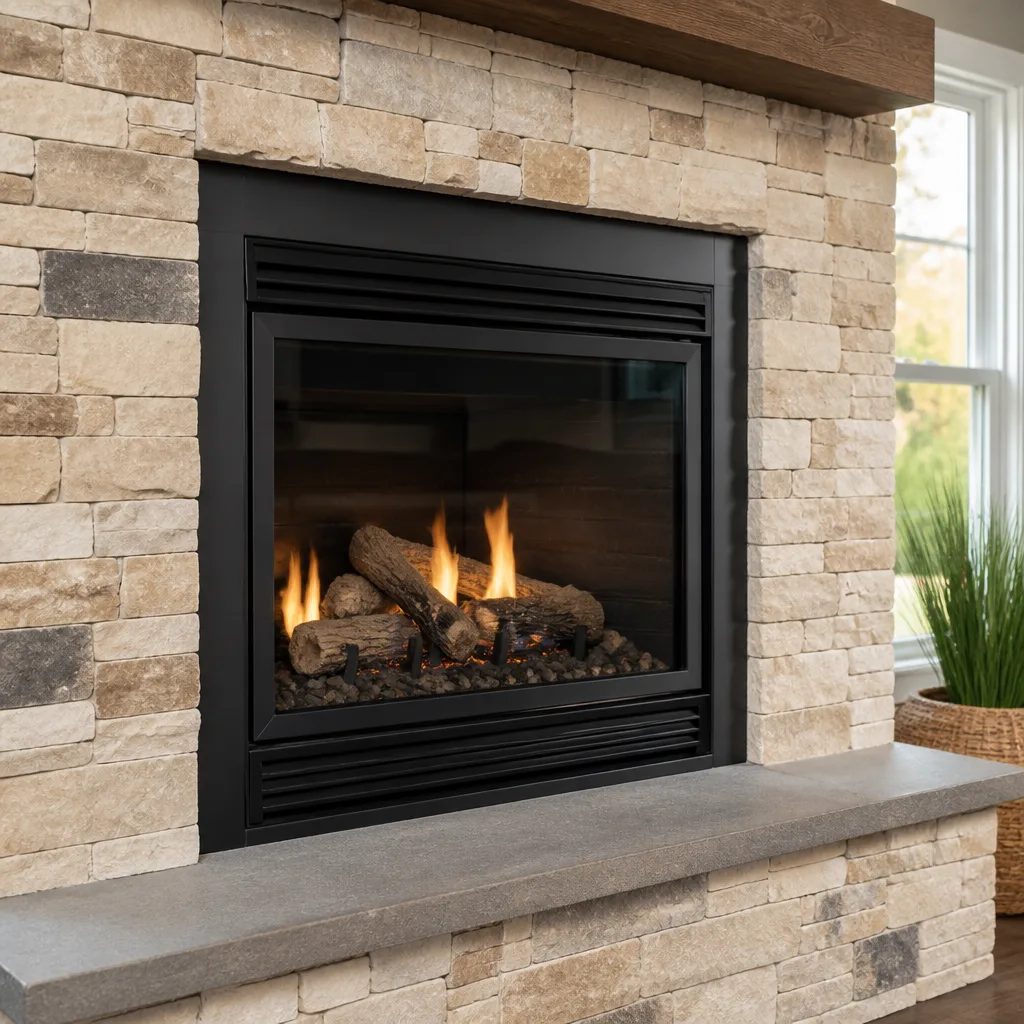
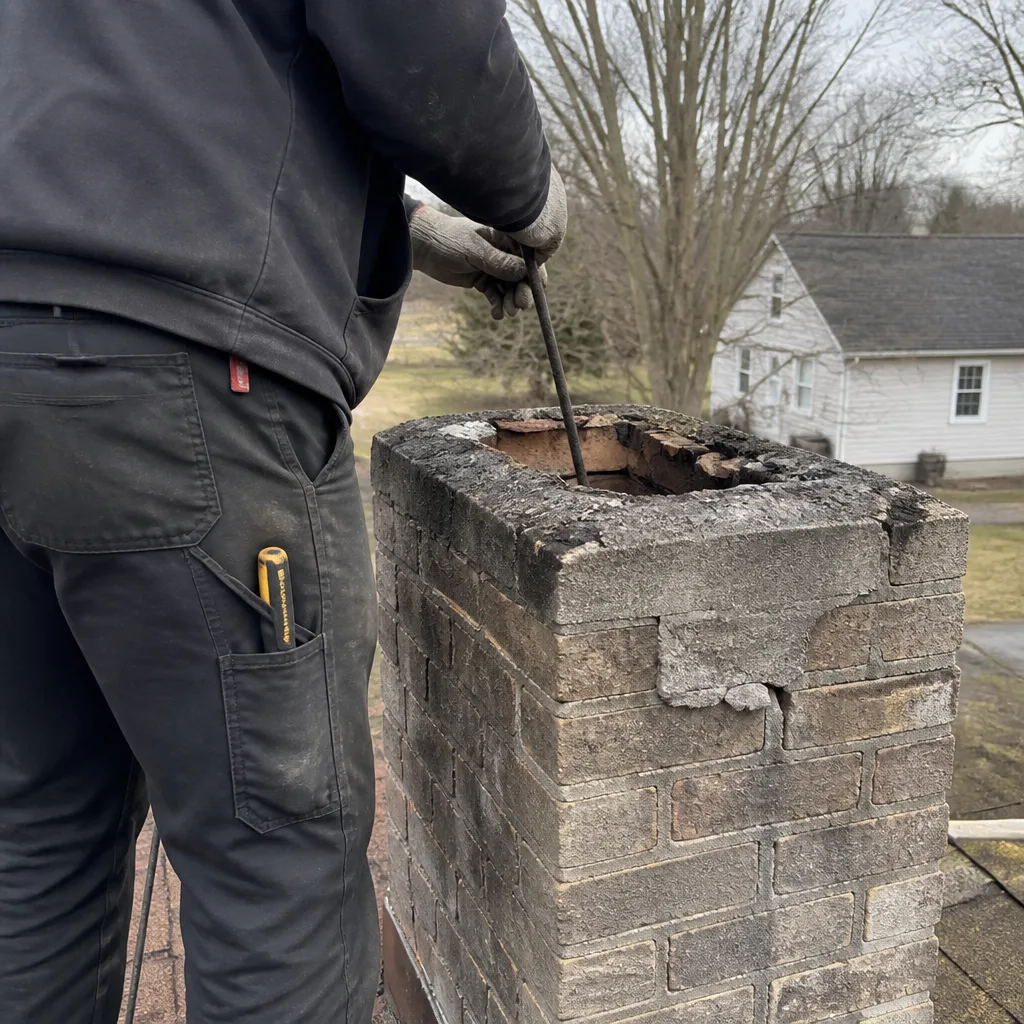 Before
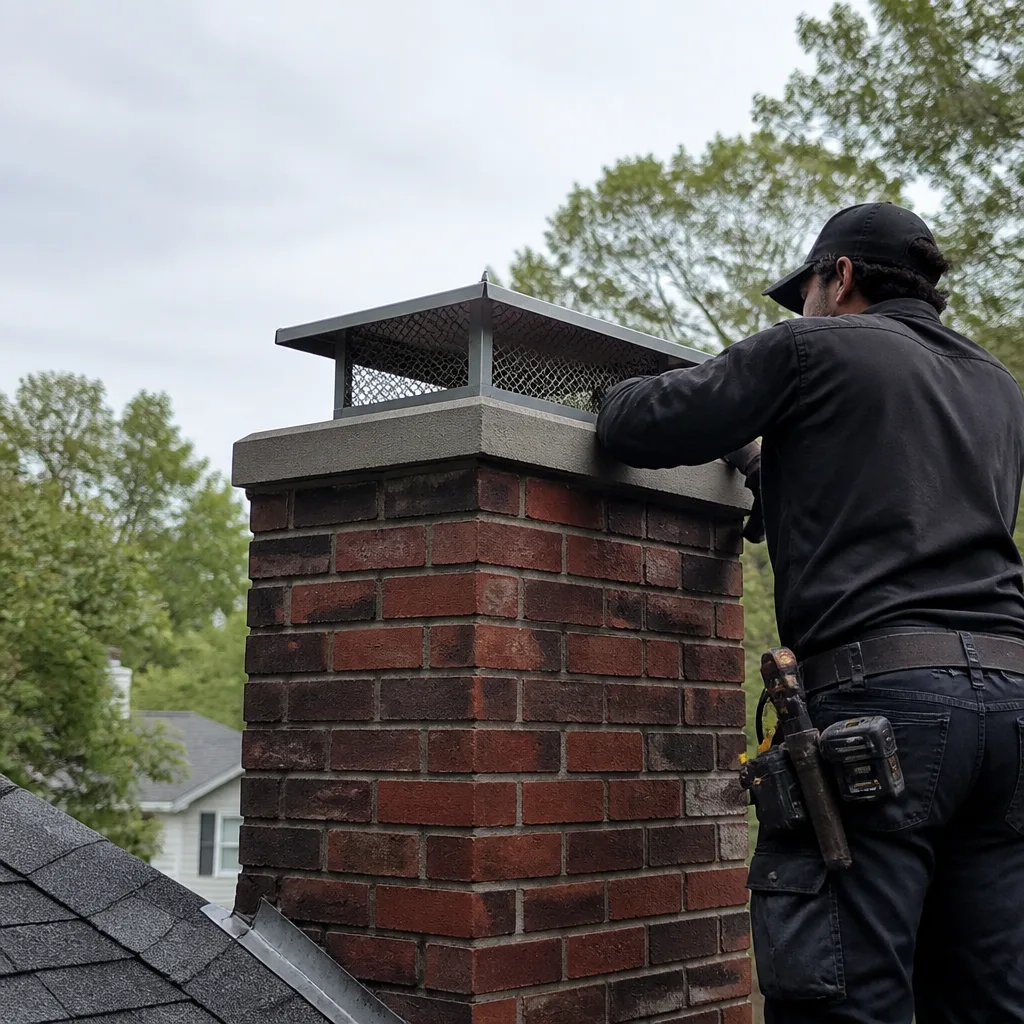 After
After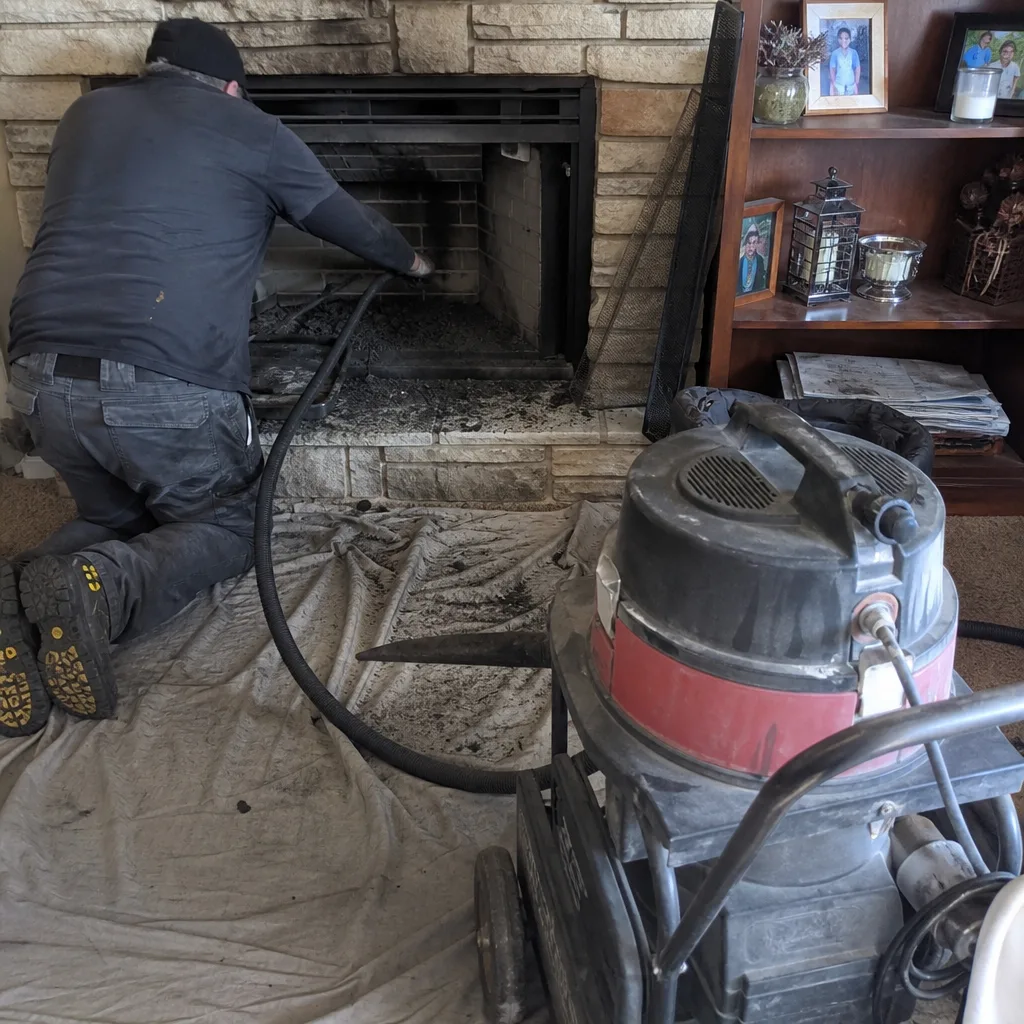 Before
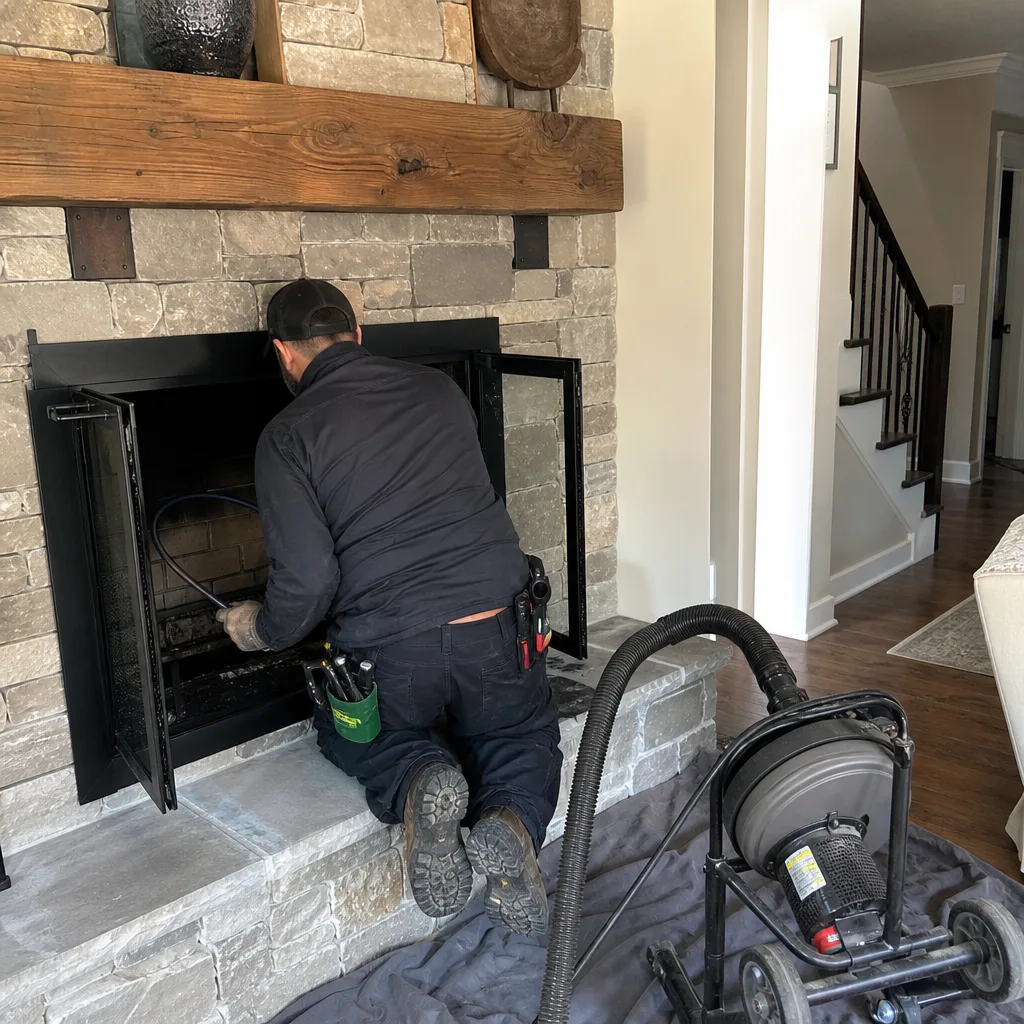 After
After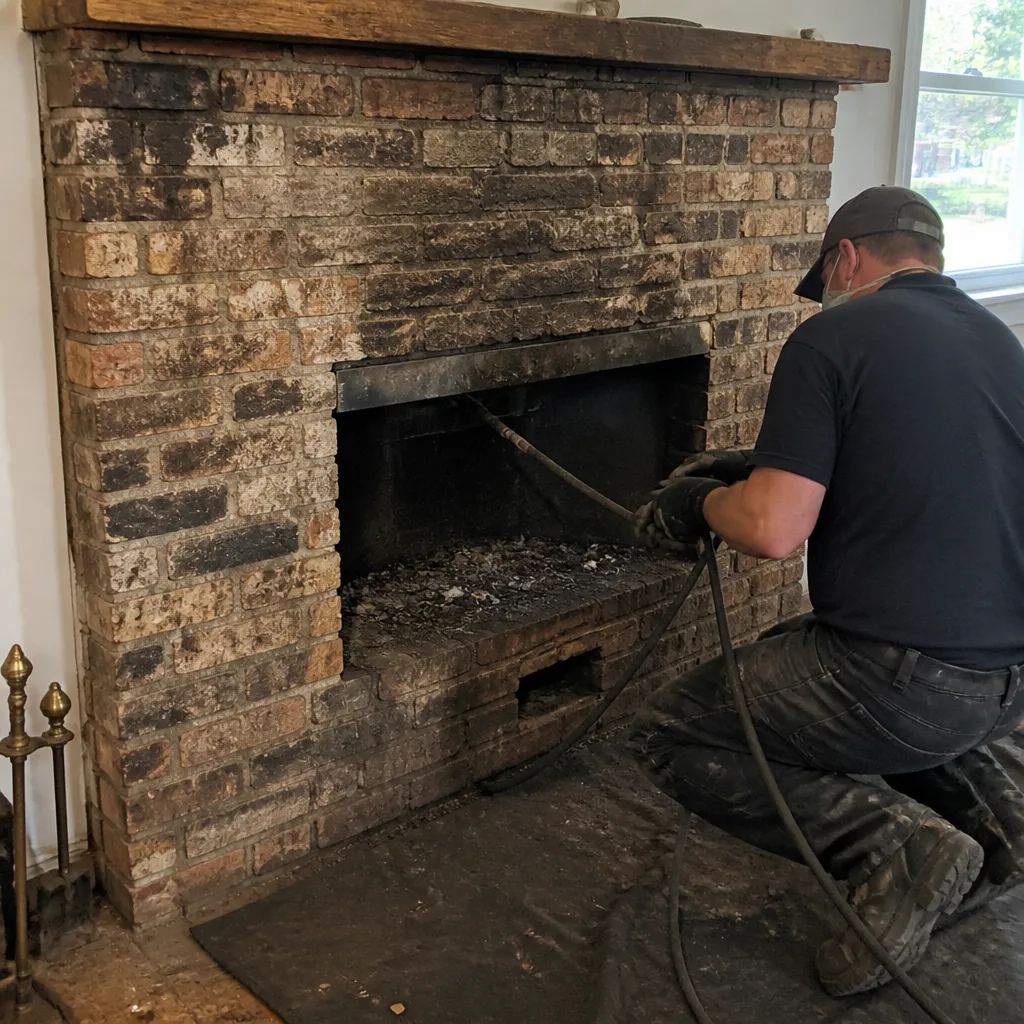 Before
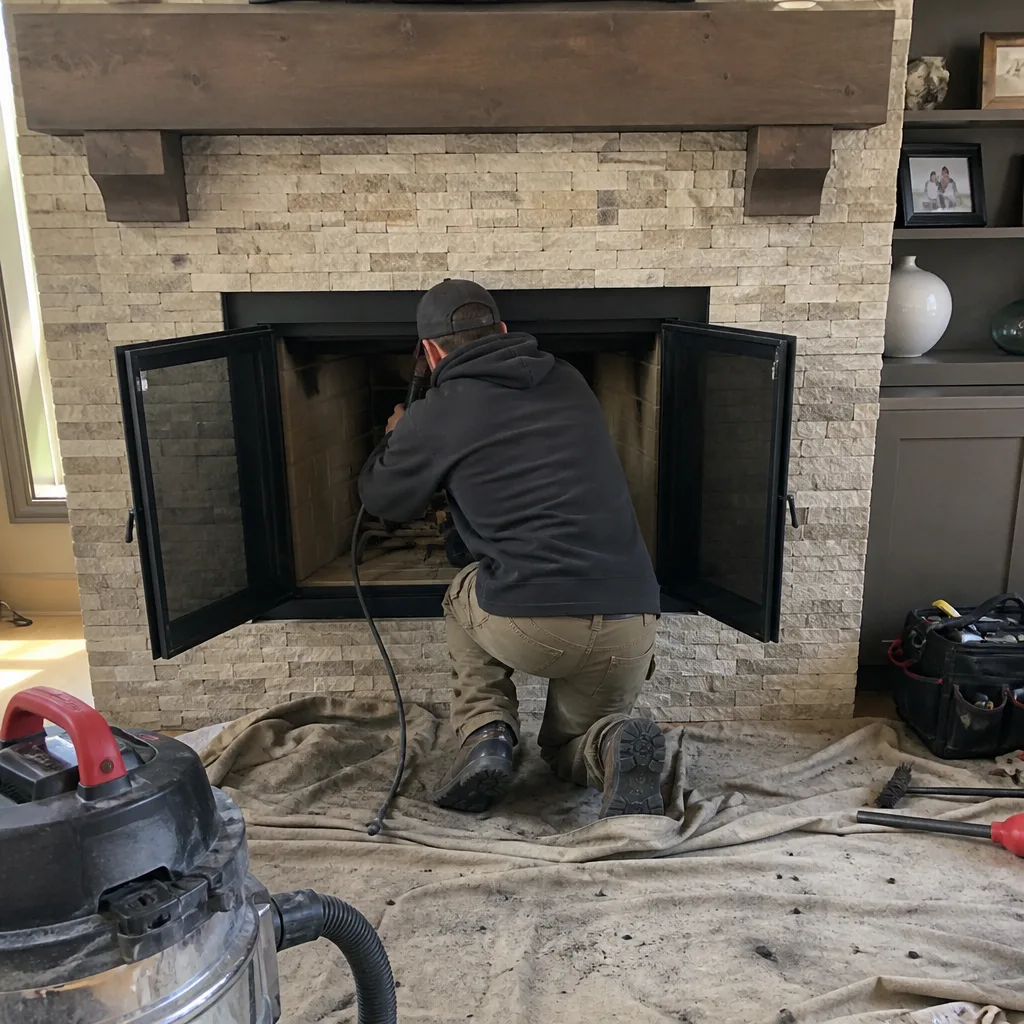 After
AfterSoot Removal in Crystal Lake, IL
Soot removal in Crystal Lake typically runs $149 to $349, depending on how much has accumulated in your flue and smoke chamber, and we complete most visits the same day the appointment is booked. If you’re seeing black residue around your firebox, a sooty smell that lingers after a fire, or a dark film on the damper plate, that’s soot telling you it’s ready to come out.
Soot is the soft, powdery byproduct of incomplete combustion. It settles on every interior surface the smoke touches – the firebox walls, the smoke shelf, the throat, and the lower sections of the flue liner. Left in place, it restricts airflow, stains masonry, and gives off that acrid smell that drifts into your living room even when the fireplace is cold. It’s also the first stage of a creosote progression: soot that gets compressed and baked by repeated fires can harden into second-degree deposits that are much harder to remove.
Emberly Chimney Cleaners has handled soot removal across Crystal Lake, from older masonry fireplaces on Walkup Road to newer prefab units in the Turnberry and Boulder Ridge neighborhoods. We’ve completed more than 38,000 Chimney Cleaning & Sweep services and inspections since 2009, every one with a written price delivered before anyone picks up a brush. For a free estimate, call us at (815) 923-3185) – a live person answers around the clock.
Soot removal is part of our full Chimney Cleaning & Sweep in Crystal Lake service, which covers everything from basic flue maintenance to Class III creosote extraction. This page focuses specifically on what soot is, when removal becomes urgent, and exactly what we do during a soot service visit.
When You Need Soot Removal
Most Crystal Lake homeowners don’t think about soot until something signals a problem. Here’s what those signals actually look like:
- Black dust or powder around the firebox opening. If you’re finding soft black residue on the hearth, the facing tiles, or the damper handle after a fire, soot has started migrating out of the firebox. It accelerates in homes with negative air pressure – common in tightly insulated newer construction in neighborhoods like Coventry and Prairie Ridge.
- A persistent burnt smell when the fireplace isn’t in use. Soot retains odor. When summer humidity in Crystal Lake climbs into the upper 70s, masonry absorbs that moisture and amplifies the smell, pushing it into the room. If your fireplace smells like it just burned down even in July, soot accumulation is usually the cause.
- Reduced draft or smoke that backs into the room. A heavy soot layer narrows the effective diameter of your flue liner. For a standard 8×8 or 8×13 liner, even a quarter-inch of buildup on all four walls makes a measurable difference in how well the chimney draws.
- You burned more than two cords of wood this season and haven’t cleaned. Crystal Lake winters are long – we’re regularly below freezing from November through March. A wood-burning household burning two or more face cords per season should be scheduling annual soot removal, at minimum.
- Your home inspection flagged the chimney. Buyers and sellers in Crystal Lake are increasingly getting NFPA 211 Level 2 inspections as part of real estate transactions. If an inspector’s report notes soot accumulation in the smoke chamber or lower flue, you’ll want that documented and cleaned before closing.
- You haven’t had service in more than 12 months and use the fireplace regularly. NFPA 211 calls for an annual inspection and cleaning for any actively used fireplace. Skipping a season doesn’t just leave soot behind – it leaves you without a current photo record of your liner’s condition.
Our Soot Removal Process
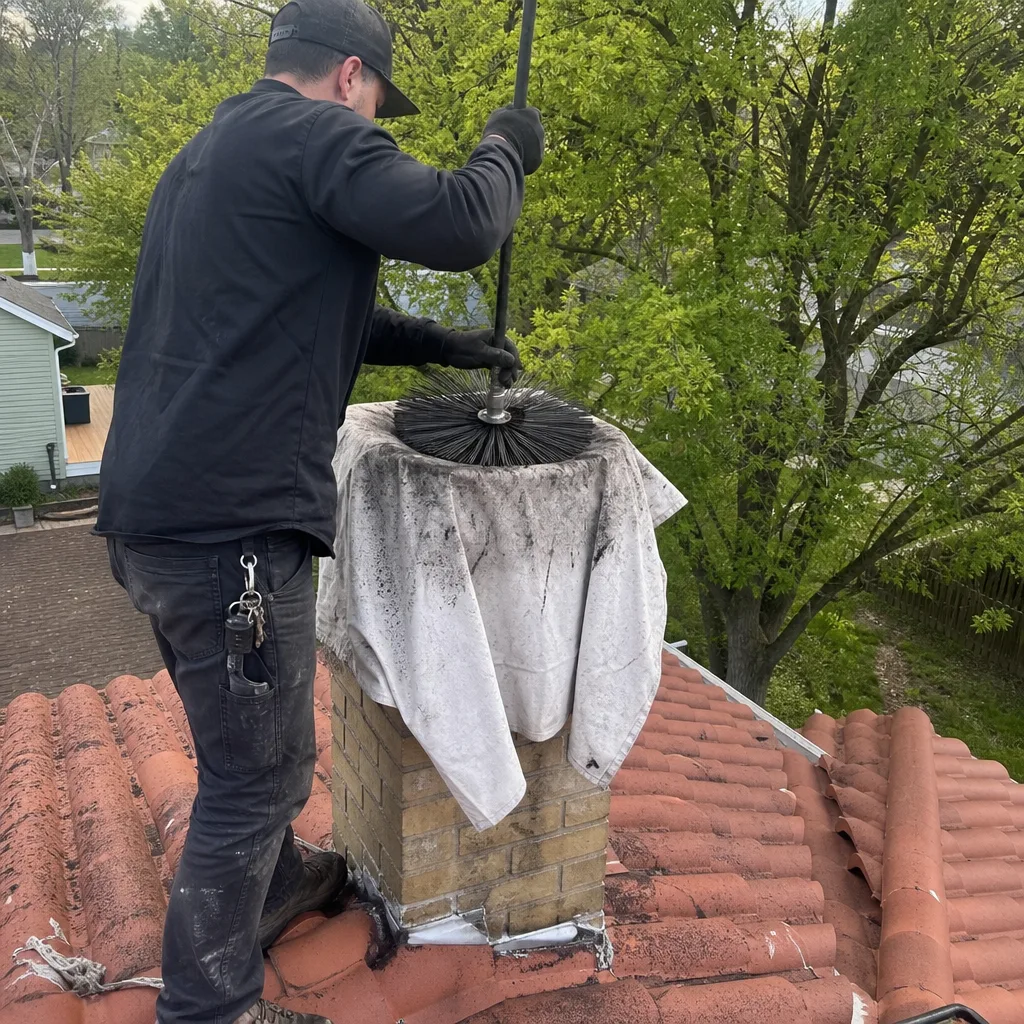
Here’s exactly what a soot removal visit looks like from the moment our tech arrives at your Crystal Lake address.
- Written price before anything else. Our tech hands you a written scope and a fixed price before opening a single case. Haven Standard Clause 1 – what we call H.A.V.E.N. “Have it in writing” – means no one starts work without your signature on a number. No surprises when the job is done.
- Camera scan of the flue. We run a video camera down the flue liner (NFPA 211 Level 2 standard) before we clean. This tells us where soot has accumulated, whether there are any cracks or spalling in the liner tiles, and whether we’re dealing with straight soot or an early creosote deposit that needs different handling. Crystal Lake has a lot of older clay tile liners – some installed in the 1970s and 1980s – and the camera shows us what a flashlight won’t.
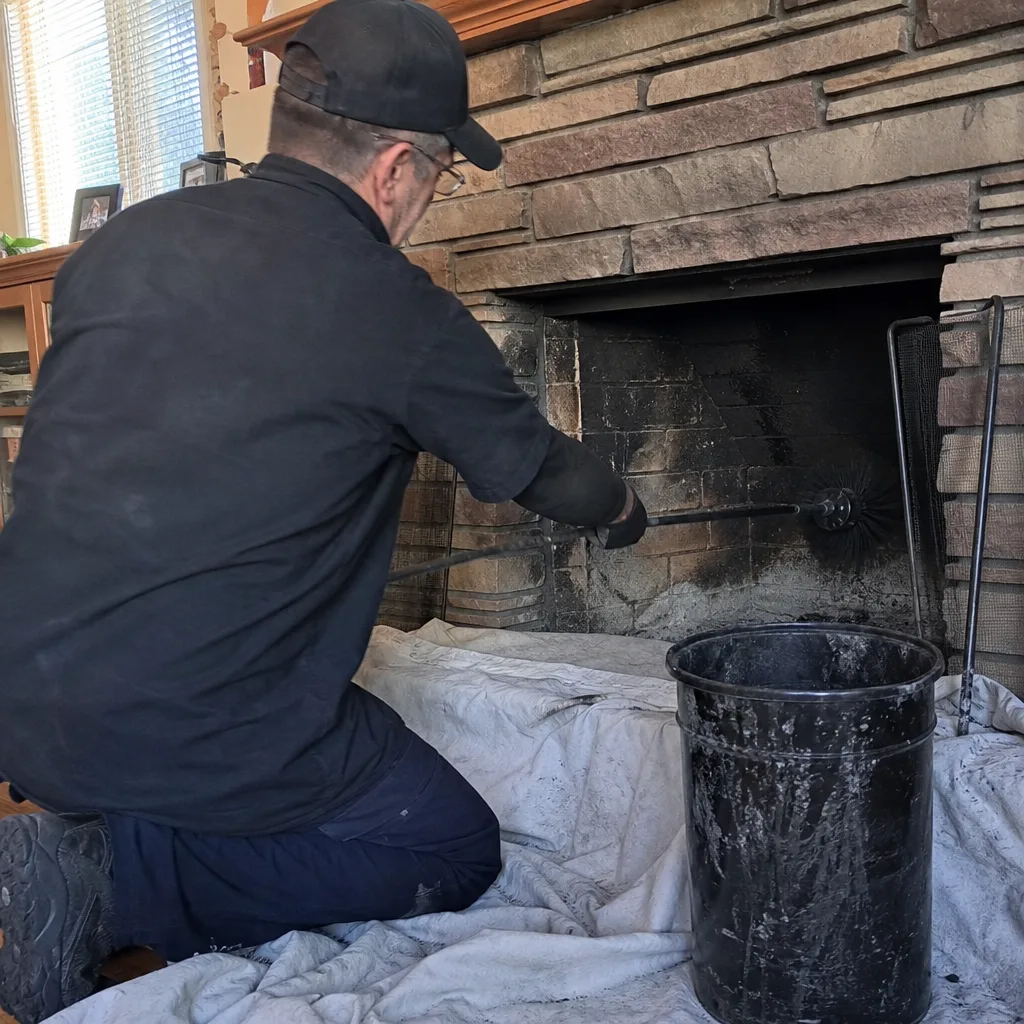
- Fireplace and smoke chamber protection. We lay drop cloths across the hearth and seal the firebox opening with a dust barrier before brushing begins. Soot is fine-grained and travels – without containment, it reaches furniture and flooring fast. We’ve been doing this in Crystal Lake homes long enough to know that a clean job site matters as much as a clean flue.
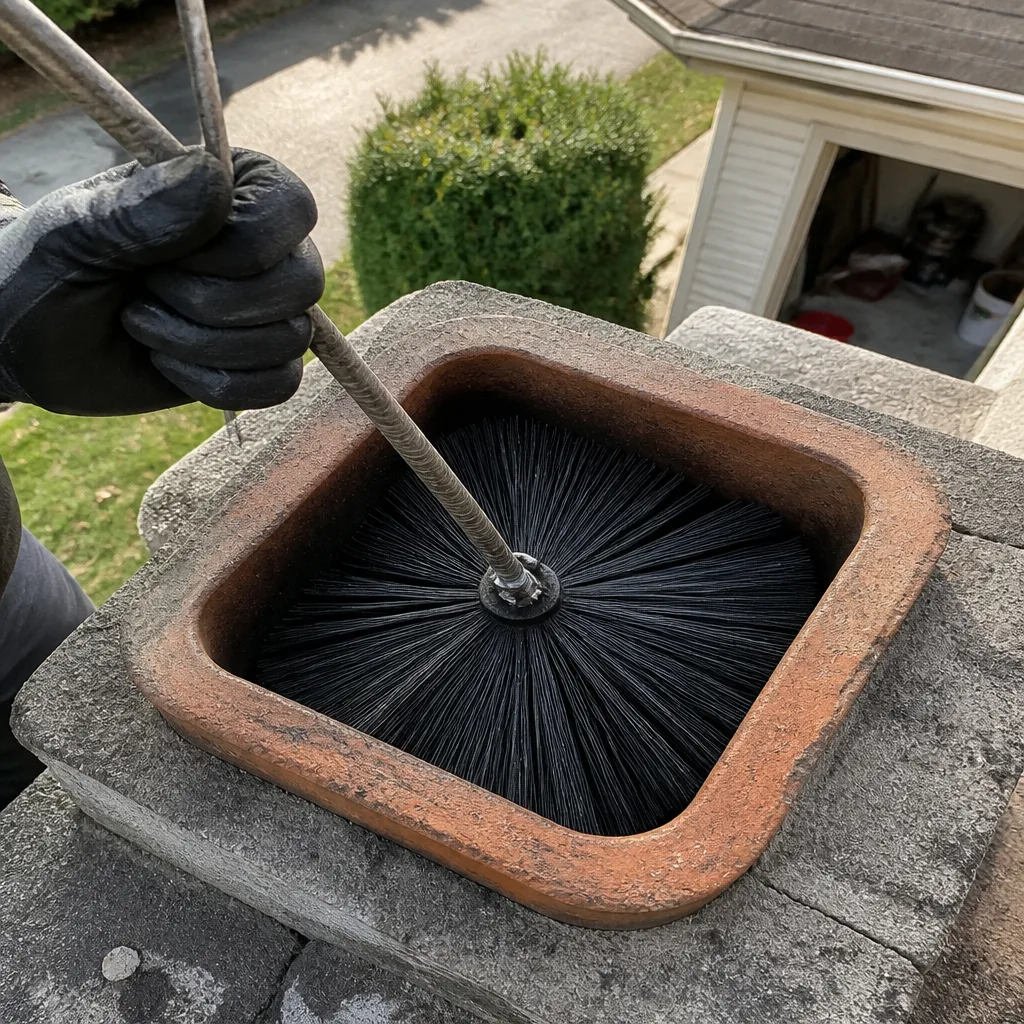
- Rotary brush cleaning from crown to firebox. We work top to bottom: crown and cap first, then the full flue column, then the smoke chamber and smoke shelf, then the firebox walls. For standard soot removal, we use Copperfield rotary brush systems sized to your liner dimensions. The smoke shelf gets hand-scraped because soot packs into that horizontal surface and the brush alone won’t reach all of it.
- HEPA vacuum extraction. Everything we dislodge is captured with industrial HEPA vacuums before it can settle onto your hearth or floor. We don’t sweep soot out the front of the firebox. It goes into sealed collection bags and leaves with us.
- Photo documentation and written report. Clause 4 of the Haven Standard requires a photo record on every job. You get before-and-after photos of the firebox, smoke chamber, and flue liner, plus written notes on any conditions we observed – liner wear, crown integrity, cap condition, and the soot class we found. That record is yours to keep. If you refinance, sell, or file an insurance claim, you have something to show.
BeforeAfterSoot Removal Pricing in Crystal Lake
How Much Does Chimney Cleaning & Sweep Cost? (2026 Price Guide) - Crystal Lake, IL: soot removal runs $149 to $349 for a standard wood-burning fireplace. Here’s what moves the price within that range:
| Scenario | Typical Price Range |
|---|---|
| Single wood-burning fireplace, light to moderate soot (cleaned within 12 months) | $149 – $199 |
| Single fireplace, heavier soot accumulation or 2+ years since last service | $199 – $269 |
| Fireplace with significant smoke chamber and smoke shelf buildup | $249 – $349 |
| Gas log fireplace soot cleaning (lighter accumulation, no ash) | $129 – $179 |
| Add-on camera scan if not already included | Included as standard |
A few things that can push a job toward the higher end: flue height above 25 feet (common in the two-story Craftsman and colonial homes in east Crystal Lake), multiple fireplaces in one home, or soot that’s starting to harden into early second-degree creosote deposits. If we find hardened creosote during the camera scan, we’ll tell you before we proceed and give you a revised written price on the spot.
What won’t affect your price: how long it takes us to get there, how many photos we take, or whether we have to move furniture to reach the hearth. Those are part of the job, not add-ons.
The camera inspection that we run on every visit is included in the service price – not billed separately, not skipped because it adds time. It’s been included as standard since 2009 because you can’t accurately price a cleaning without knowing what you’re cleaning.
Call (815) 923-3185 to get your written estimate. We give free second opinions on any written competitor estimate you bring us, too – bring it in, we’ll go line by line with you.
Why Crystal Lake Chimneys Accumulate Soot Faster Than You Might Expect
Crystal Lake sits at roughly 950 feet elevation in McHenry County, and the wind patterns off Crystal Lake itself – the lake the town is named for – affect how chimneys draft, especially on homes along Virginia Road and the east shore. On high-wind days, downdrafts are common. Downdrafts push exhaust back down the flue before it fully clears, and that slows the draw enough to encourage incomplete combustion. Incomplete combustion produces soot faster.
There’s also the wood supply question. A lot of Crystal Lake homeowners burn mixed hardwood loads that include wood cut too recently – green oak and green ash are common in the area. Green wood burns at a lower temperature and produces significantly more soot than properly seasoned wood. We see this regularly in homes that source wood locally in early fall and burn it that same winter. If your soot accumulation seems heavy relative to how much you’ve burned, the moisture content of your fuel is usually where to look first.
Prefab fireplaces – which account for a large share of the fireplaces in Crystal Lake construction from the 1990s and 2000s – also have proportionally smaller flue diameters than traditional masonry. Less flue volume means soot builds up faster in linear terms. An eighth-inch deposit in a prefab flue restricts airflow more significantly than the same deposit in a larger masonry system.
Soot vs. Creosote: What the Difference Actually Means
Soot and creosote come from the same source – unburned carbon compounds in wood smoke – but they behave differently and require different approaches to remove.
Soot is the soft, powdery black deposit you can smear with a finger. It’s a first-degree deposit, and rotary brushing removes it cleanly. Creosote is what soot becomes when it’s subjected to repeated heating cycles. Second-degree creosote is a flaky, tar-like layer that needs chemical treatment before mechanical removal. Third-degree creosote – sometimes called glazed creosote – is a hardened, shiny black coating that doesn’t respond to brushing at all and requires specific chemical conditioners (we use products from HeatShield and Gelco, sourced through our supply network) applied ahead of a follow-up cleaning.
Glazed creosote is also a serious fire hazard: it ignites at roughly 451 degrees Fahrenheit and burns at temperatures that can damage a clay tile liner in a single event. We flag the class of any deposit we find during the camera scan and explain in plain terms what that means before we do anything.
Most Crystal Lake soot removal visits find first-degree deposits. But when the camera shows something harder, you know before you pay.
Key Takeaways
- Soot removal in Crystal Lake runs $149 to $349 for a standard wood-burning fireplace; gas units typically cost less.
- A camera scan (NFPA 211 Level 2) is included on every visit – not optional, not an add-on.
- You get a written price before work starts, every time, on every job – Haven Standard Clause 1.
- You leave with before-and-after photos and written notes on what we found – Haven Standard Clause 4.
- Every job is backed by the 365-Day Done Right Promise: if it’s not right, we come back and make it right.
- Crystal Lake’s lake-effect wind patterns and common use of green hardwood make annual soot removal a practical necessity for active fireplaces here.
- Soot left in place can progress to second- or third-degree creosote deposits that cost more to treat and pose a genuine fire risk.
FAQs – Soot Removal
How much does soot removal cost in Crystal Lake?
For Chimney Cleaning & Sweep Near Me in Crystal Lake, IL, soot removal runs $149 to $349 for a single wood-burning fireplace, with the final number depending on how long it’s been since the last cleaning, how much has accumulated in the smoke chamber, and the height of your flue. A camera scan of the liner is included in that price – not a separate charge. Call (815) 923-3185 for a written estimate; it’s free and it comes with a written scope before anyone picks up a tool.
Is soot removal the same as a chimney sweep?
Soot removal is part of a chimney sweep, but not always the entire job. A chimney sweep covers the full flue system – cap, crown, liner, smoke chamber, smoke shelf, and firebox. Soot removal refers specifically to the extraction of first-degree carbon deposits. If the camera scan finds hardened creosote alongside the soot, that’s addressed separately with chemical treatment before mechanical removal. We explain what we found during the scan before we quote the additional work.
Can I remove soot myself?
You can wipe down firebox walls with a dry brush or a chimney cleaning log for light surface deposits, but that approach doesn’t reach the smoke chamber, smoke shelf, or flue liner – which is where soot accumulation actually affects draft and fire risk. It also leaves you without a camera record of your liner’s condition. For anything beyond wiping down the visible firebox brick, a tech with the right equipment and a video camera is the practical answer. Call (815) 923-3185 and we’ll tell you honestly what you’re looking at before you book anything.
How often should soot be removed in a Crystal Lake home?
NFPA 211 recommends Annual Sweep and inspection for any actively used wood-burning fireplace. For Crystal Lake specifically, where most households burn from November through March, and where green hardwood from local sources is common, annual removal is the practical minimum. Homes that burn more than two cords per season, or that have noticed reduced draft or odor issues, should consider scheduling before the start of each burn season rather than waiting until spring. Call (815) 923-3185 to book, or to get a straight answer about whether your schedule makes sense for your usage.
For a broader look at what a full-season maintenance visit covers, our home page outlines all the services Emberly Chimney Cleaners offers across the Crystal Lake area.
Written by Corrine Halstead, Owner at Emberly Chimney Cleaners Crystal Lake, serving Crystal Lake since 2009.